

The “before” is a room almost every new parent recognizes: a standard builder-grade nursery in flat beige, with wall-to-wall carpet, a plastic changing table, a single shaded window, and one dated dome light doing all the work. It is perfectly fine — and completely forgettable. But the bones are better than they look: a good window wall, square proportions, and plenty of room to work. So rather than commit to one look, we ran the same nursery through nine complete design directions — from romantic cottage to moody luxe — so you can see exactly how far a plain beige box can travel. Every image below is a true before-and-after of the same room. Use them as a planning tool: find the direction that fits how you actually live, then steal the moves that make it work. If you like this format, see the same idea in our compact bedroom styled twelve ways and our attic-to-loft sanctuary.
What’s Inside
1. Romantic Cottage Nursery
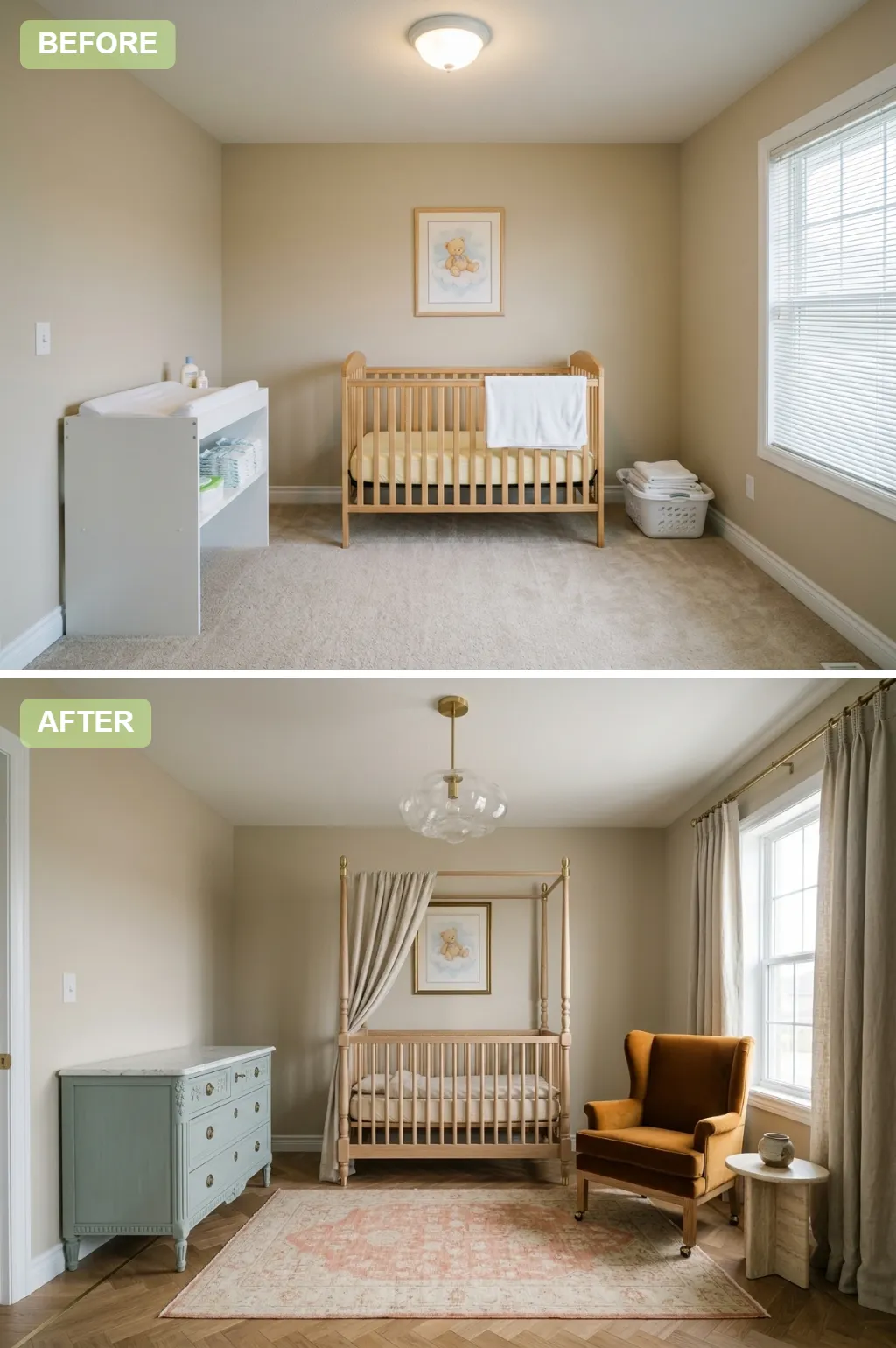
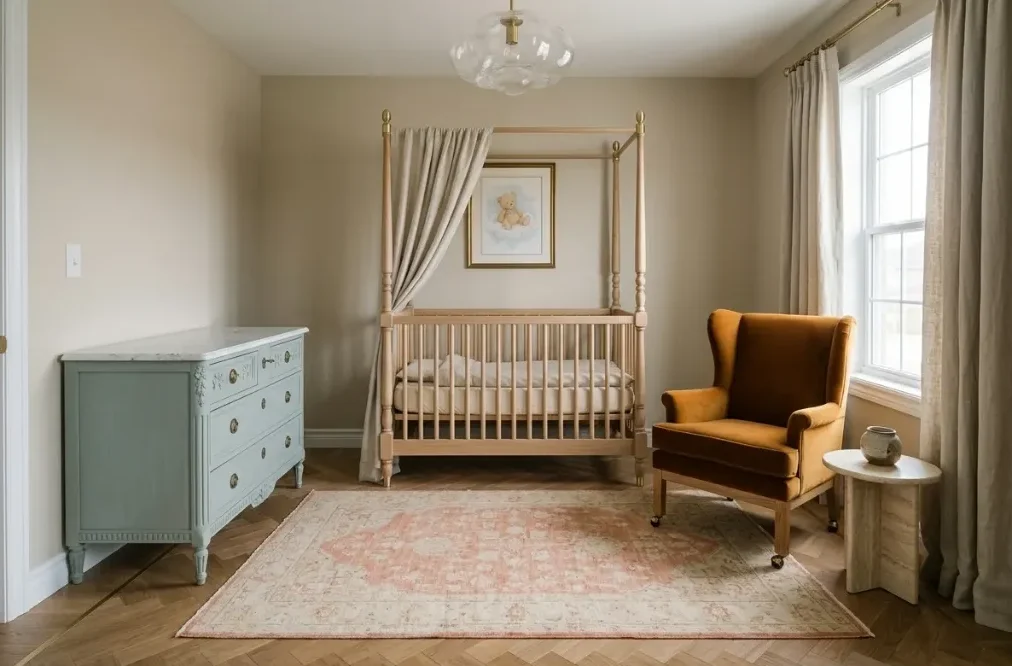
The first direction trades the flat builder-beige for soft, collected romance. A painted sage-green French dresser stands in for the plastic changing table, a four-poster crib draped in unbleached linen gives the low room real height, and a single amber-velvet wingback turns the empty corner into a proper feeding chair. A faded-rose vintage rug warms the new herringbone floor, and a glass cloud pendant replaces the dated dome light. The lesson: one heirloom-style piece and one saturated jewel-tone chair are enough to lift a whole pastel scheme out of "nursery default."
Color Palette
A calming painted-green dresser as the anchor piece
A gentle greige that reads soft, not cold
One rich, saturated seat to wake up the pastels
A vintage-washed rug that grounds the room with warmth
Inspiration Tips for Similar Spaces
- Pair a painted heirloom dresser with a tall canopy or four-poster crib to give a small, low nursery a real focal point and a sense of height.
- Let one saturated jewel-tone chair (amber, rust, forest) carry the room so a soft pastel scheme never tips into looking washed out.
2. Warm Organic & Artisan
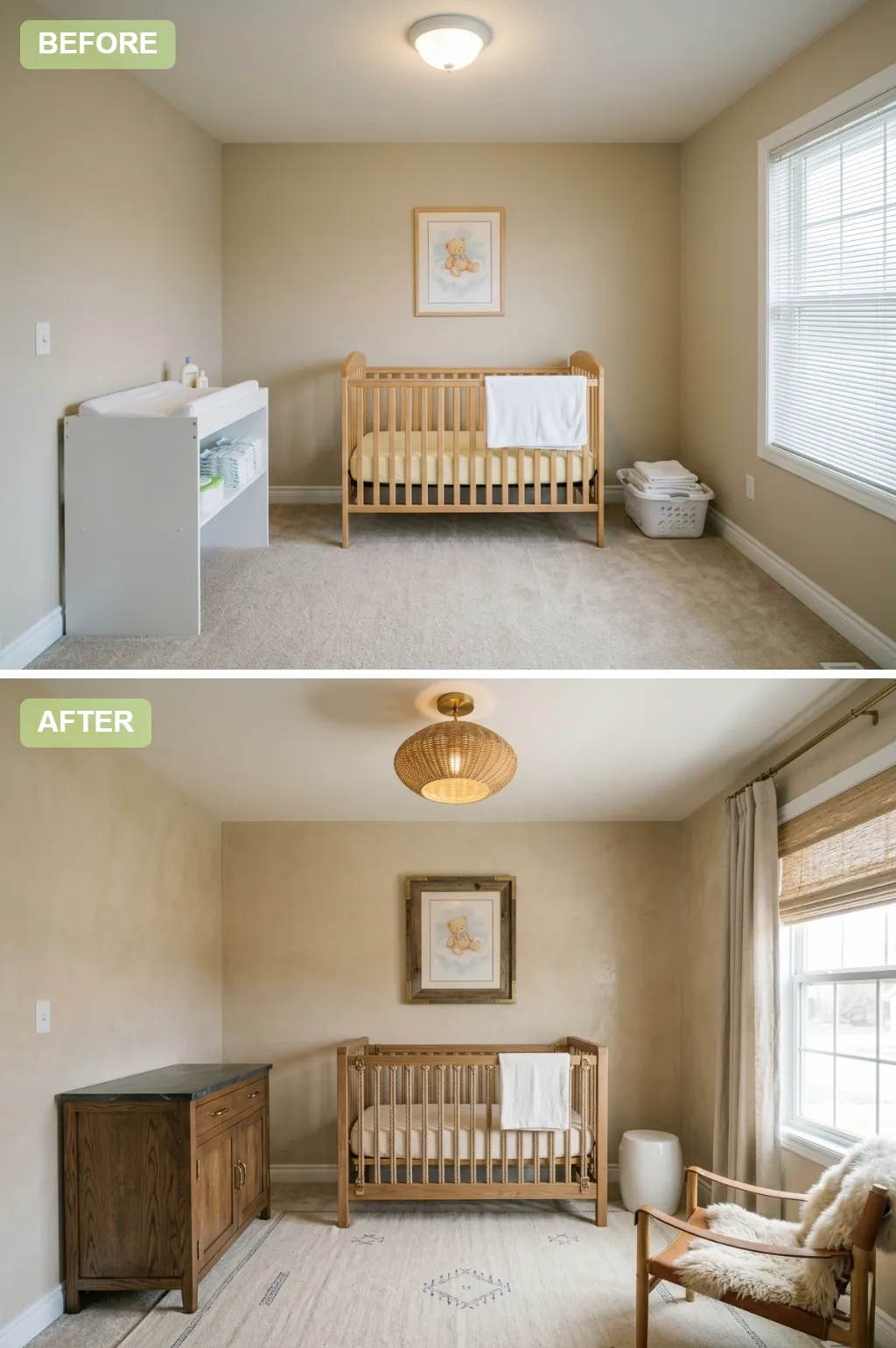
Here the makeover is all about texture you can feel. Flat painted walls give way to hand-troweled plaster in a soft clay tone, a woven-rattan flush mount filters the harsh ceiling light into a warmer glow, and a reclaimed-wood crib brings honest grain into the room. A dark-wood console with a stone top replaces the flimsy changing shelf, a leather sling chair draped in sheepskin softens the corner, and a layered jute rug warms the floor. Nothing here is shiny or new-looking — and that is exactly the point.
Color Palette
Hand-troweled plaster for depth without bold color
Honest, grainy wood on the crib and console
A woven natural-fiber layer underfoot
A worn-in leather sling chair for the corner
Inspiration Tips for Similar Spaces
- Swap flat builder paint for hand-troweled plaster or limewash to add quiet depth and movement to a wall without committing to a strong color.
- Choose natural-fiber light fixtures and woven shades — they diffuse hard daylight into the soft, even glow that helps babies settle and nap.
3. Vintage Heritage
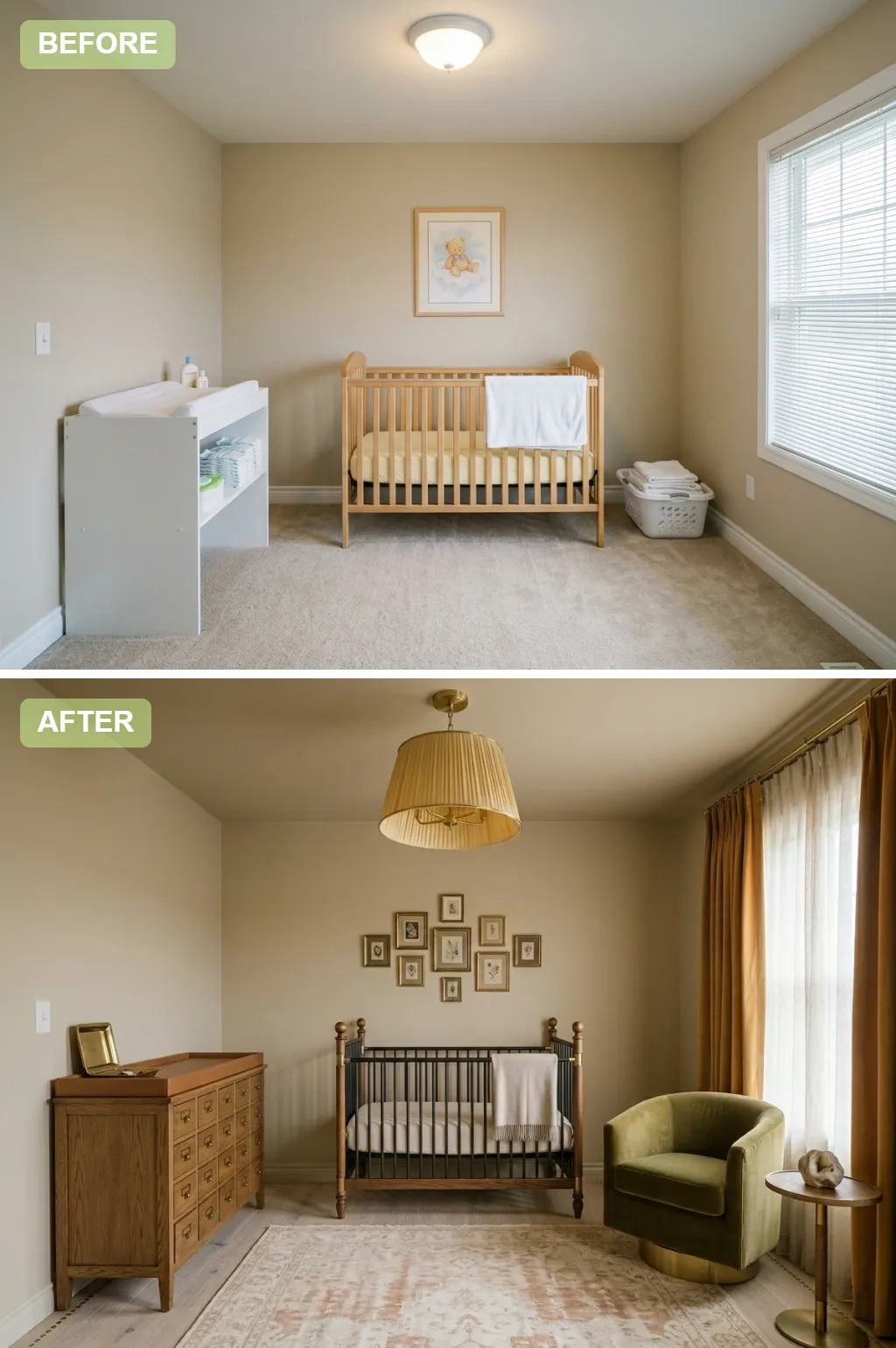
This version leans into collected, old-soul character. The walls deepen to a café-au-lait, an antique iron-and-brass spindle crib replaces the plain pine, and a vintage apothecary dresser brings a wall of little drawers and instant history. An olive-green velvet swivel chair holds the corner, a pleated brass pendant warms the ceiling, and a "cloud" of small botanical frames fills the tall wall most nurseries leave blank. Mustard linen curtains finish it. It feels less like a showroom and more like a room handed down through a family.
Color Palette
A warm, milky brown that feels established
A dark antique-style iron-and-brass spindle crib
A muted-green swivel for character and comfort
Mustard curtains and brass that read heirloom
Inspiration Tips for Similar Spaces
- An antique-style iron crib (one verified to meet current safety standards) adds heirloom character a flat-pack crib simply cannot.
- Cluster small framed prints into a gallery "cloud" above the crib to fill the tall, empty wall that makes most nurseries feel unfinished.
4. Quiet Modern Minimalist
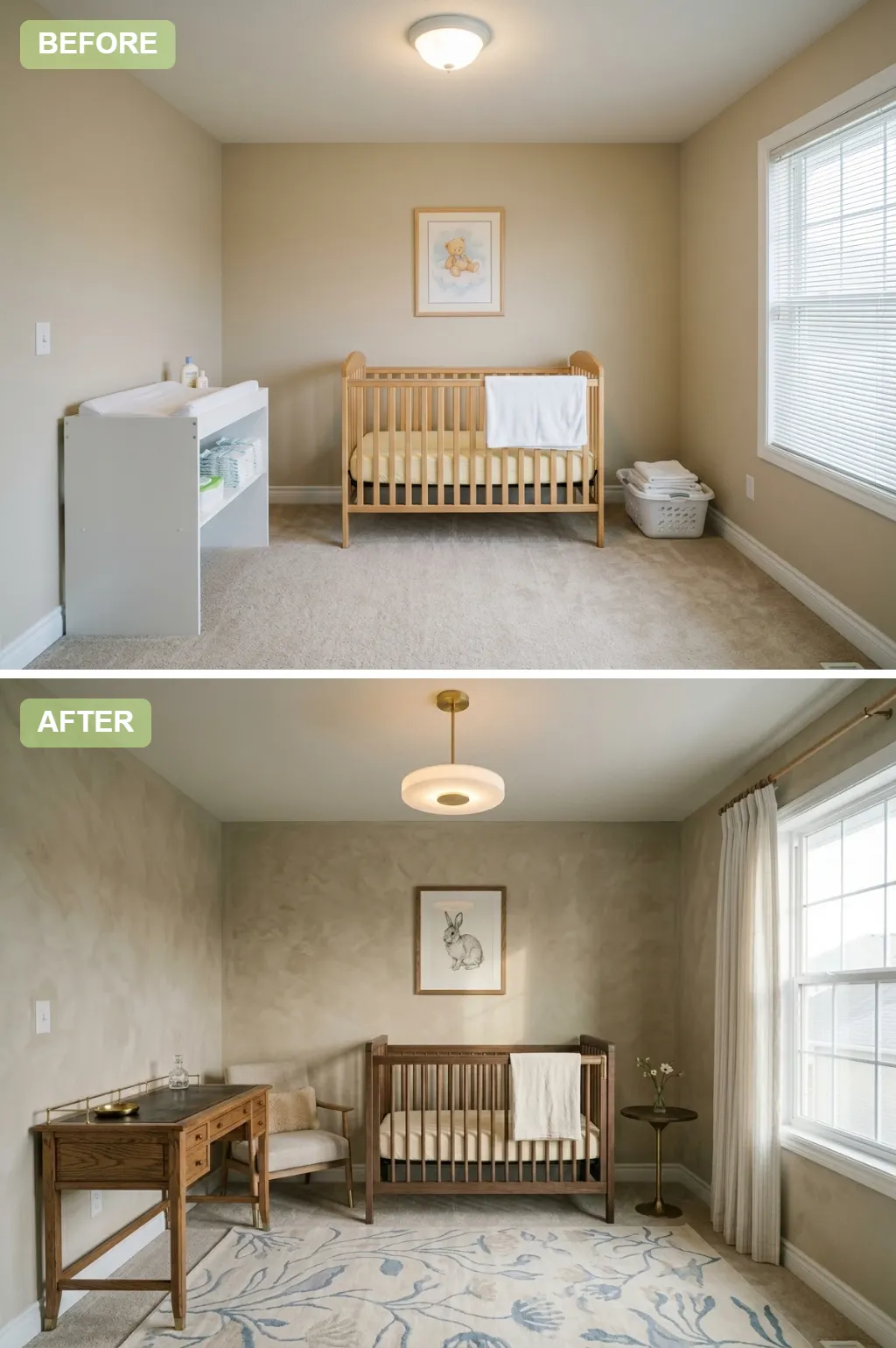
The calmest direction of the nine. A limewashed taupe accent wall adds the faintest movement behind a dark-walnut mini-crib, and instead of cramming the room with gear, we carved out a tiny parent zone: a slim wood writing desk and one comfortable linen chair for late-night feeds and journaling. A single framed bunny sketch is the only "decoration," a soft blue-floral wool rug warms the floor, and full-height white curtains keep the window light gentle. Three quiet tones, nothing extra — and it feels twice as restful for it.
Color Palette
A barely-there wash with soft, natural movement
A grounding deep-wood mini-crib
A pale, comfortable chair for the reading corner
A single muted blue carried in the rug and art
Inspiration Tips for Similar Spaces
- Carve a small parent zone — a slim desk and one genuinely comfortable chair — into the nursery so feeds, journaling, and a cup of tea have a home.
- Hold the palette to three quiet tones and let one piece of framed line art be the only decoration; restraint is what makes a small room feel calm.
5. Coastal Boho
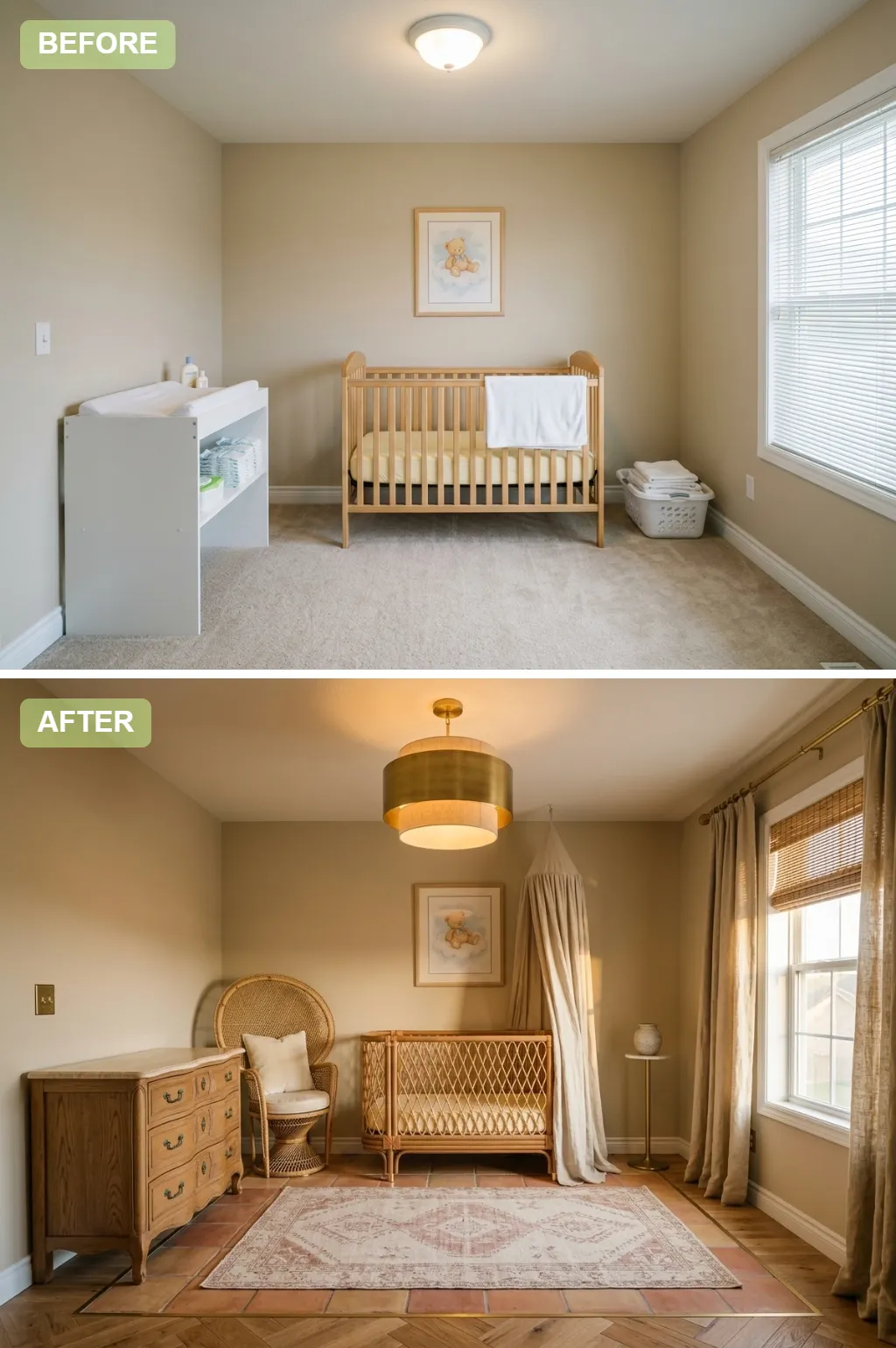
Sun-washed and relaxed, this take swaps the beige carpet for warm terracotta tile and the whole room loosens up. A woven-rattan crib with a flowing linen canopy takes center stage, a rattan peacock chair adds a sculptural, vintage-boho note, and a French oak dresser keeps it grounded. A brass drum pendant and natural woven shades warm the light, and a faded kilim-style rug ties the floor together. It is the most "vacation house" of the nine — perfect for a warm-climate or coastal home where light pours in.
Color Palette
Warm clay tile that radiates a relaxed, sunny feel
Woven crib and peacock chair for texture
A soft, sandy neutral backdrop
A washed, well-traveled rug to tie it together
Inspiration Tips for Similar Spaces
- A rattan crib and a sculptural peacock chair bring instant texture and a sun-washed, relaxed feel — ideal for warm-climate or coastal homes.
- Layer a flowing canopy in unbleached linen above the crib for softness and a little gentle shade during daytime naps.
6. Moody Luxe
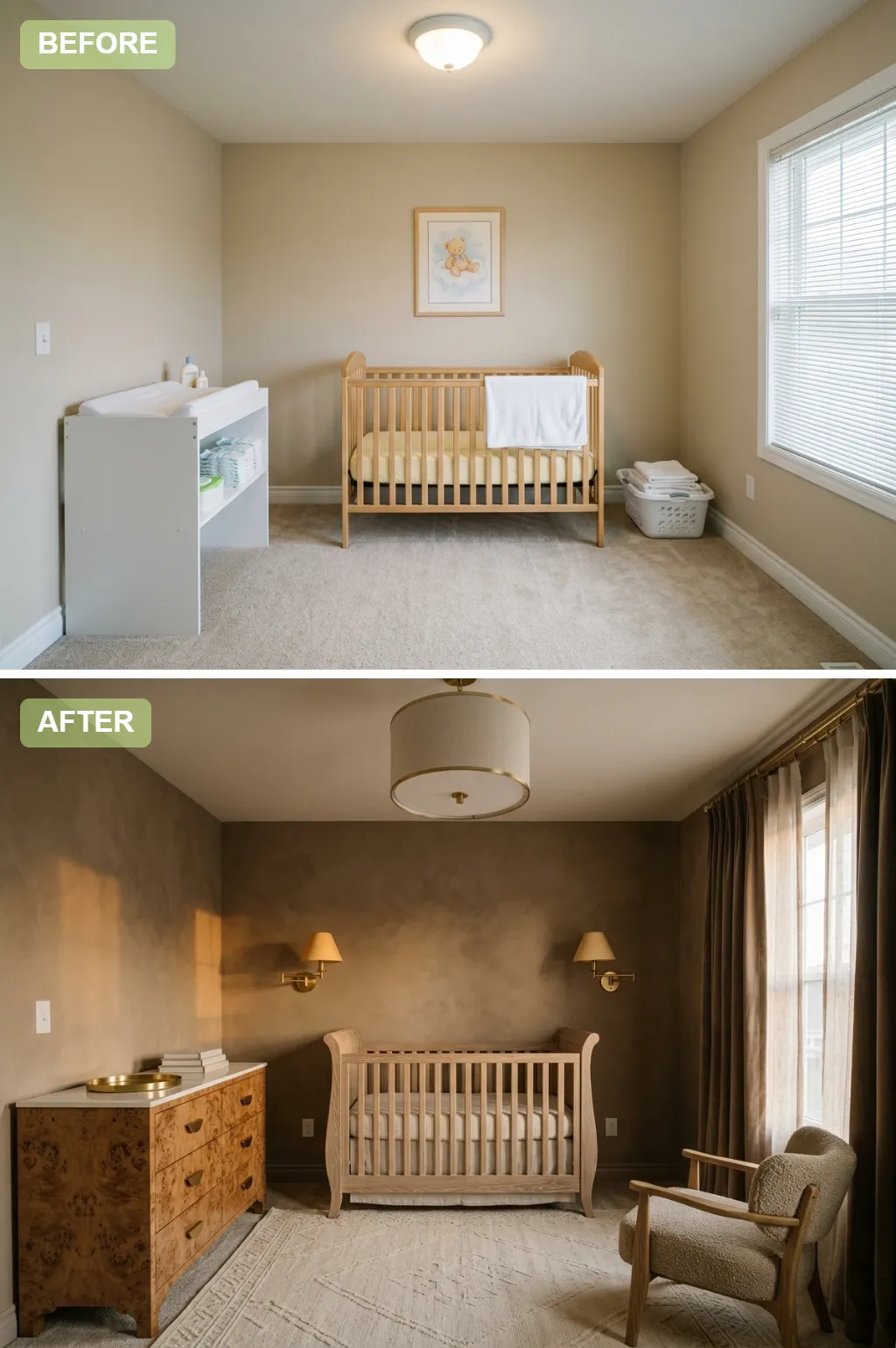
The boldest gamble, and it pays off. Instead of fighting the room, this version wraps it in deep cocoa Venetian plaster that envelops the crib like a cocoon. Warm brass swing-arm sconces keep the mood intentional rather than dark, a burl-wood dresser with a brass tray adds quiet glamour, and a pale boucle chair stops the depth from tipping into a cave. A sleigh-style oak crib, ivory rug, and chocolate drapes finish it. Dark rooms are calming, not scary — and they are genuinely better for daytime naps.
Color Palette
An enveloping, nap-friendly dark plaster
A warm, figured-wood dresser with quiet glamour
Warm sconces that keep the dark feeling cozy
One pale, soft seat to lift the depth
Inspiration Tips for Similar Spaces
- Dark walls are calming, not scary: a deep cocoa or espresso envelops a nursery and genuinely helps with darker, longer daytime naps.
- Balance the depth with warm brass lighting and one pale boucle or ivory piece, so the room reads cozy and considered rather than cave-like.
7. Scandinavian & Japandi
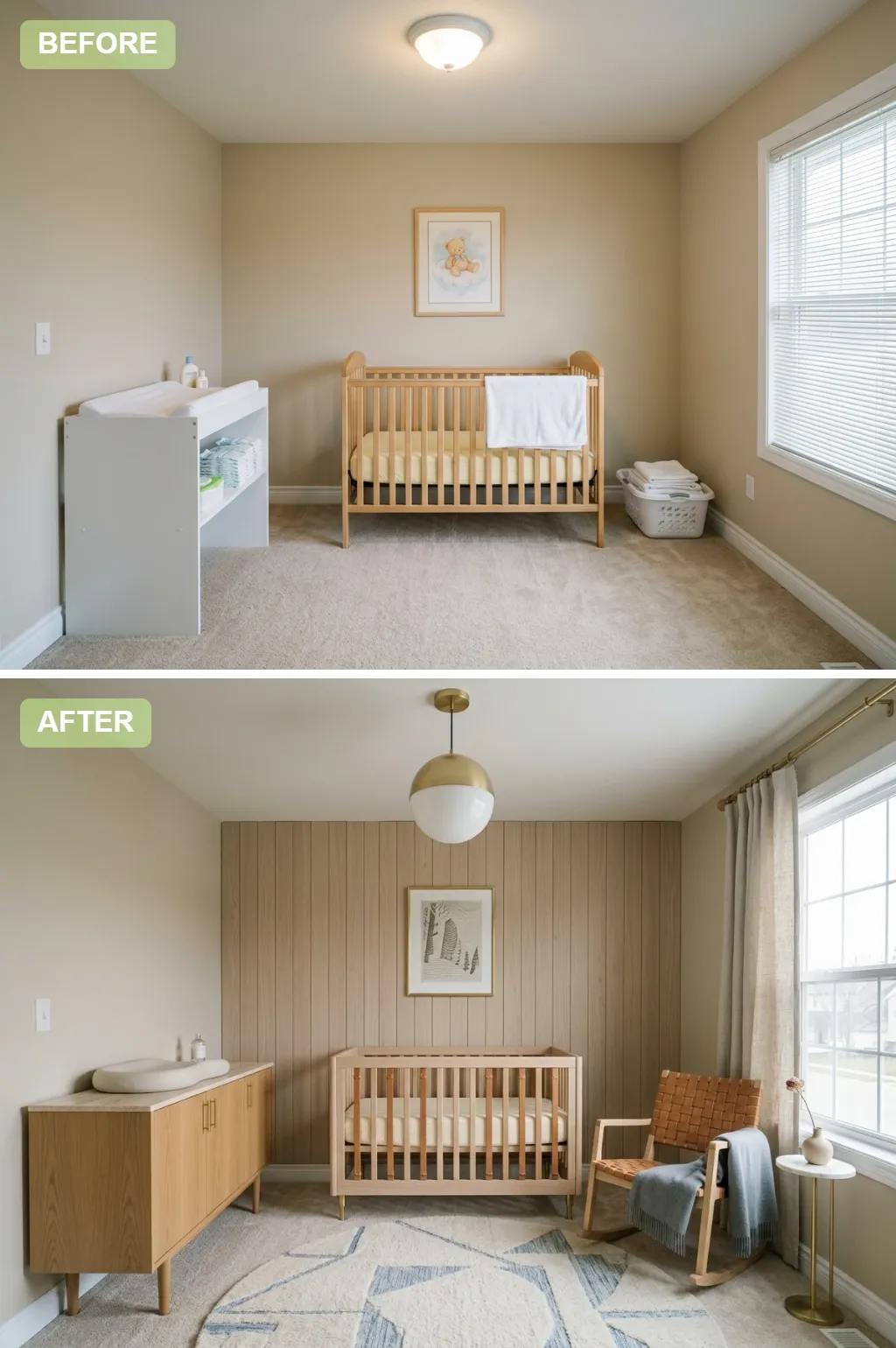
Light, warm, and beautifully simple. A floor-to-ceiling light-wood plank wall behind the crib gives the minimalist room a clear focal point and a hit of warmth, while a light-oak mid-century crib and matching console keep everything low and calm. A woven-leather rocking chair — the one piece you will use every single night — sits by the window with a soft blue throw, and a geometric blue-and-cream rug grounds the floor. A glass-and-brass globe pendant is the single modern flourish. Quiet, functional, and never cold.
Color Palette
A light-wood plank wall for warmth and focus
A soft white that keeps the room bright but cozy
A muted blue in the throw and rug
A wipeable woven-leather rocking chair
Inspiration Tips for Similar Spaces
- A floor-to-ceiling light-wood plank wall behind the crib adds warmth and an instant focal point in an otherwise pared-back, minimal room.
- Invest in a true rocking or gliding chair in a wipeable leather or wool — it is the single piece of nursery furniture you will use every night.
8. Transitional Campaign
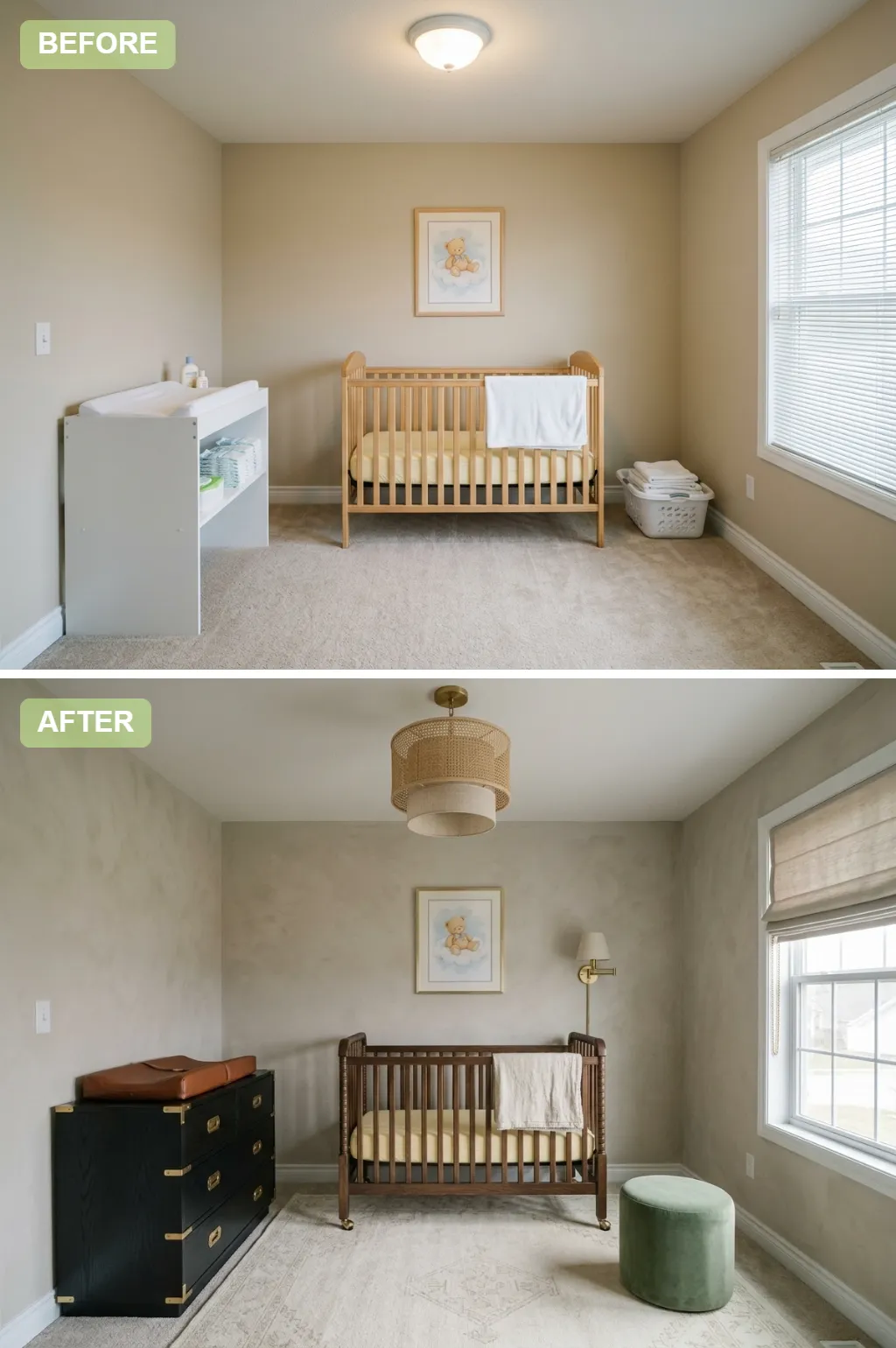
A soft, grown-up neutral with one piece of real edge. Greige limewashed walls keep the room calm, but the flimsy changing table is gone — in its place, a black campaign dresser with brass corners and a secured leather changing pad on top. A dark spindle Jenny Lind crib adds tradition, a sage-green velvet pouf brings a pop of color and a footrest, and a woven-rattan drum pendant warms the light. A vintage rug and a brass swing-arm sconce finish it. It is the most "will still look right when they are ten" of the nine.
Color Palette
A soft, grown-up neutral that ages well
A black-and-brass dresser with real edge
Warm brass corners, sconce, and accents
A muted-green pouf for color and a footrest
Inspiration Tips for Similar Spaces
- A black campaign dresser with brass hardware grounds a soft neutral nursery and keeps working as a grown-up piece long after the crib is gone.
- Top any sturdy dresser with a securely strapped changing pad to save the cost — and the floor space — of a single-use changing table.
9. Soft Modern Farmhouse
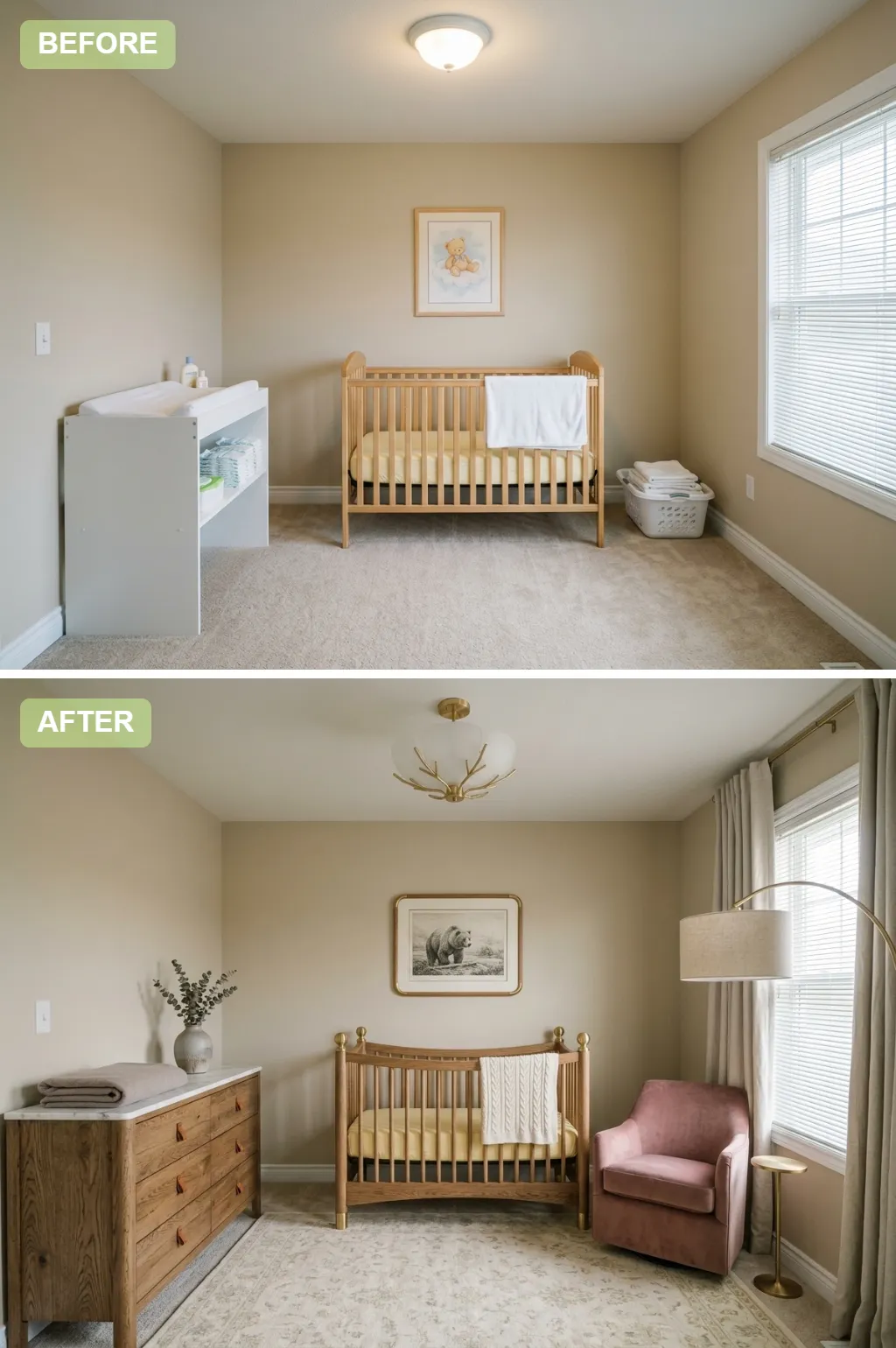
We end on the coziest, most universally loved direction. Warm honey-oak wood runs through a spindle crib and a rustic dresser with leather pulls, a single dusty-mauve velvet swivel chair adds softness without picking a "boy or girl" lane, and a framed bear sketch keeps it sweet but not saccharine. An arched brass floor lamp gives gentle, directional light for night feeds, a stoneware vase of eucalyptus adds life, and a soft botanical rug warms the floor. It is gender-neutral, calm, and the kind of room a family actually grows into.
Color Palette
A soft, cozy neutral that flatters wood tones
Warm spindle crib and rustic dresser
A muted rose swivel for softness, not sweetness
A muted green that brings the room to life
Inspiration Tips for Similar Spaces
- Warm honey-oak wood plus one dusty-rose or sage accent chair makes a gender-neutral nursery feel genuinely cozy rather than clinical.
- Add an arched brass floor lamp for soft, directional light during night feeds — it spares everyone the harsh overhead glare at 3 a.m.
Pro Tips & Advice
- Start with the crib wall, not the paint chip. Decide where the crib lives (away from windows, vents, and cords), then build the room — lighting, art, and storage — around that anchor.
- Layer three levels of light. A soft overhead fixture on a dimmer, a wall or floor lamp for night feeds, and blackout shades for naps will do more for a nursery than any single "statement" piece.
- Buy the chair you will actually sit in. A comfortable, wipeable rocker or glider is the one nursery purchase you use every single night — spend here before anywhere else.
- Make the dresser do double duty. A sturdy dresser plus a strapped-on changing pad replaces a single-use changing table and keeps working for a decade.
- Anchor the floor with a washable rug. A faded vintage-style or flat-weave rug hides spills, softens the room for tummy time, and ties the whole scheme together.
Final Result & Atmosphere
- Across all nine directions the same thing happens: the room stops reading as a leftover beige box and starts reading as a room someone clearly cared about. The bones never changed — same window, same proportions, same footprint — only the choices did.
- Whether the mood is soft and romantic or deep and moody, the transformation lands the same way: you walk in and forget there was ever flat carpet, a plastic changing table, and a single sad dome light here.
- The takeaway for your own nursery is simple — pick one direction that matches how you live, steal the two or three moves that make it work, and let the rest stay quiet.
Conclusion
A plain builder-beige nursery is one of the easiest rooms in the house to write off — and, as these nine before-and-afters show, one of the most rewarding to transform. The moves that matter are consistent across every style (anchor the crib, layer the light, buy the right chair, make the dresser earn its keep); the personality is entirely yours. Save the two or three directions that fit your home and your baby’s room, borrow the specific pieces that make them work, and remember that you are not starting from nothing — you are starting from a blank, sturdy canvas. If you like seeing one room run through many looks, see the same idea in our compact bedroom styled twelve ways and our open-concept kitchen transformation.
Frequently Asked Questions
How much does a nursery makeover cost?
It depends entirely on scope. A refresh — paint, a rug, new lighting, art, and styling around furniture you keep — sits at the low end, while new flooring, a custom feature wall, and all-new furniture pushes it up. The smartest order is paint and lighting first (the biggest visual change for the money), then the crib and chair, then the decorative layers.
What is the one piece worth spending the most on?
A comfortable, durable feeding chair. A good rocker or glider in a wipeable leather or performance fabric is the single piece of nursery furniture you will use every night for a year or more, so it earns its cost faster than anything decorative.
Do I need a dedicated changing table?
Not usually. A sturdy dresser with a securely strapped changing pad on top does the same job, saves floor space in a small room, and keeps working as real storage long after the changing-pad stage is over.
Are dark walls a bad idea in a nursery?
No — a deep, enveloping color like cocoa or charcoal is calming, photographs beautifully, and actually helps darken the room for daytime naps. The trick is to commit fully and balance the depth with warm lighting and one or two pale, soft pieces so the room reads cozy, not gloomy.
How do I choose a nursery style I will not get sick of?
Pick the direction that matches the rest of your home rather than a trend, and lean toward warm neutrals and natural wood for the big, expensive pieces. Keep the trend-driven or color-specific choices in the cheap, swappable layers — rug, art, textiles, and lighting — so the room can evolve as your child grows.
Which of these styles works best in a small nursery?
The Quiet Modern Minimalist, Scandinavian, and Soft Farmhouse directions are the safest for tight rooms, because low furniture, light wood, and a restrained palette keep the floor visible and the sightlines clean. If you love a darker look, the Moody Luxe version proves deep color can work in a small room too — as long as you keep the object count low.
Sources & Further Reading
- American Academy of Pediatrics (AAP) — safe-sleep guidance — crib placement, a bare firm mattress, and keeping soft bedding and bumpers out of the sleep space.
- U.S. Consumer Product Safety Commission (CPSC) — federal crib safety standards, changing-table and furniture-anchoring requirements, and recall information.
- American Society of Interior Designers (ASID) — guidance on lighting layers, durable materials, and child-safe space planning for family rooms.
- This Old House — practical cost ranges for flooring, feature walls, and small-room renovation detailing.
- Architectural Digest & Dezeen — reference interiors across cottage, organic, Japandi, vintage, and moody directions.


Comments
Loading comments…
Leave a comment
Your email won't be published — it's only used to let you know if we reply. Comments appear after approval.