
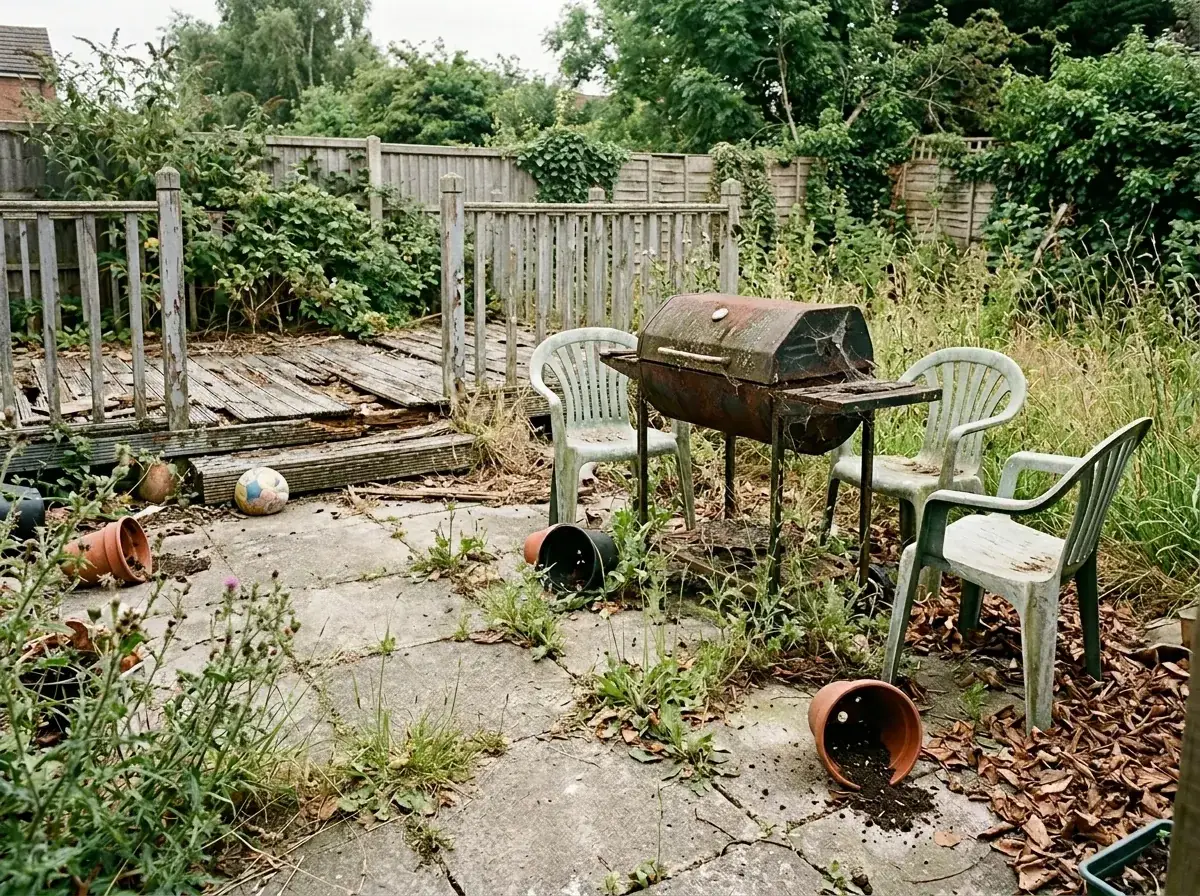

A backyard is the one room most of us never finish. I have walked plenty of them — the rotting deck, the dead-zone lawn, the fence nobody chose. These eleven makeovers show how a small site, planned with the same discipline I bring to a compact floor plan, becomes an outdoor room you actually use at 7 a.m. on a Tuesday, not just in a listing photo.
What’s Inside
- Warm & Luxurious Modern Retreat
- Vibrant Mediterranean Escape
- Sleek Contemporary Lounge
- Fresh & Airy Modern Cottage
- Dramatic Minimalist Sanctuary
- Tranquil Japanese Zen Garden
- Relaxed Coastal Getaway
- Retro-Chic Mid-Century Patio
- Charming Rustic Cottage Garden
- Striking Monochrome Modern
- Classic English Country Garden
- How I’d Plan a Backyard From Scratch
- Frequently Asked Questions
- Final Read
I spend my working days reviewing compact house plans — under 2,200 square feet, where every square foot has to earn its keep. A small backyard works exactly the same way. You don’t need more space; you need a plan that decides what the space is for before you spend a dollar on hardscape. Zone it, light it, pick warm materials over cold ones, and a 300-square-foot patch outperforms a sprawling yard that never resolved into anything. The eleven rewrites below run the style range, but every one of them follows that order of operations. If exterior right-sizing interests you, my walk-through of these curb-appeal redemptions of a neglected ’70s ranch covers the same logic on the front side of the house.
Warm & Luxurious Modern Retreat
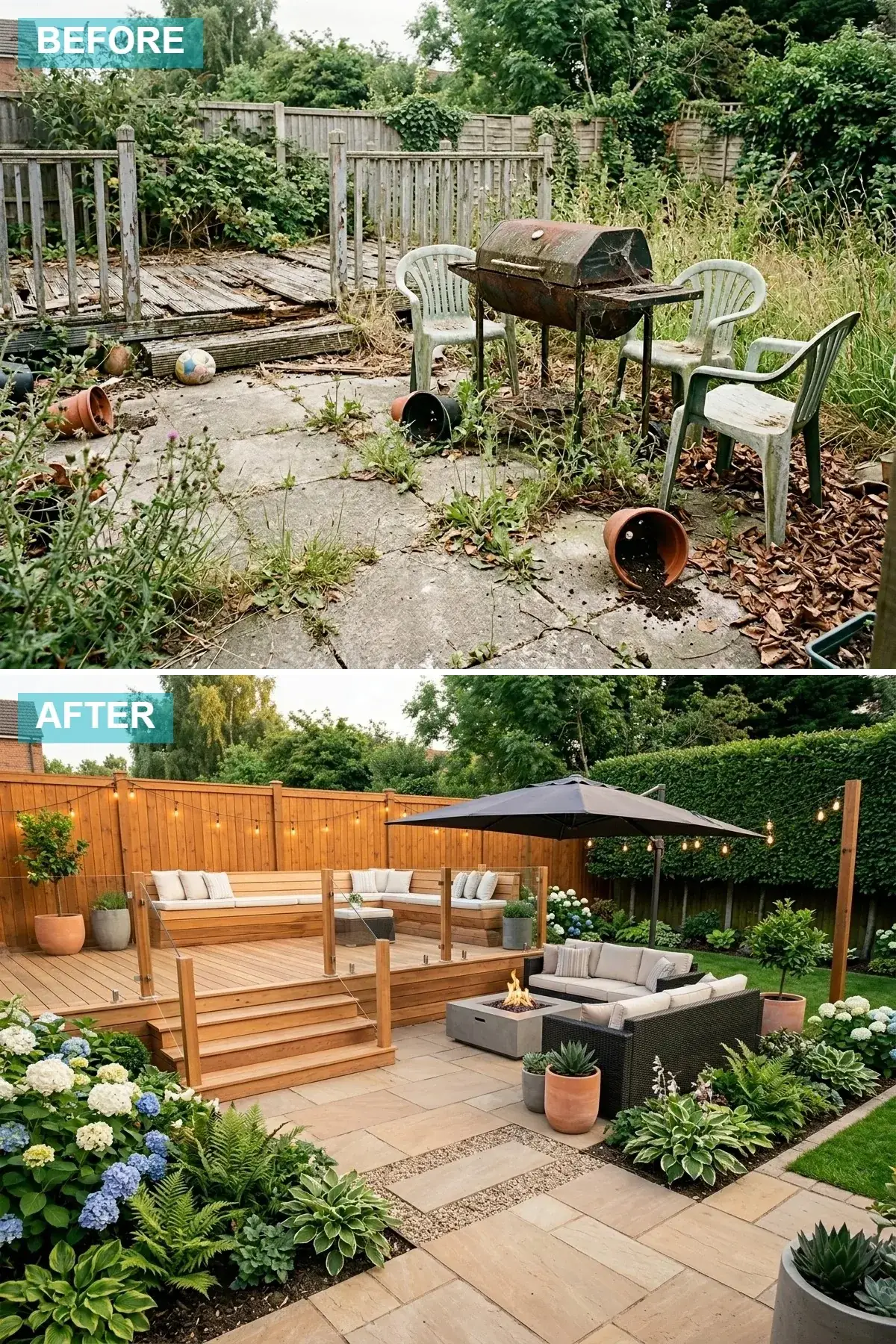
The rotting structure here came out and a multi-level cedar deck went in — built-in bench seating along the edge, sleek glass railings that keep sightlines open across the yard. What I like is the level change: it does the zoning for free. The upper deck reads as dining, the lower flagstone patio holds a fire pit and a lounge group, and you never need a rug or a fence to tell one from the other. String lights and a cantilever umbrella carry the space into the evening, and new perimeter fencing gives it a quiet backdrop instead of a view of the neighbor’s recycling bins.
Color Palette
Warm Cedar
#CCA483
Inviting and natural timber tone
Sandstone Beige
#D8C8B4
Light, neutral base for the patio
Charcoal Grey
#363636
A strong, modern contrast color
Concrete Grey
#9E9E9E
Sleek, industrial accent
What Makes It Work
- Built-in bench seating eats no floor space and keeps the deck reading clean — the right move on a tight footprint.
- Glass railings hold the safety code without chopping the yard into visual slices.
- A change in level does the same job as a wall: it separates dining from lounging with zero added structure.
- String lights are the cheapest square-footage multiplier you can buy — they make the patio usable three more hours a day.
Vibrant Mediterranean Escape
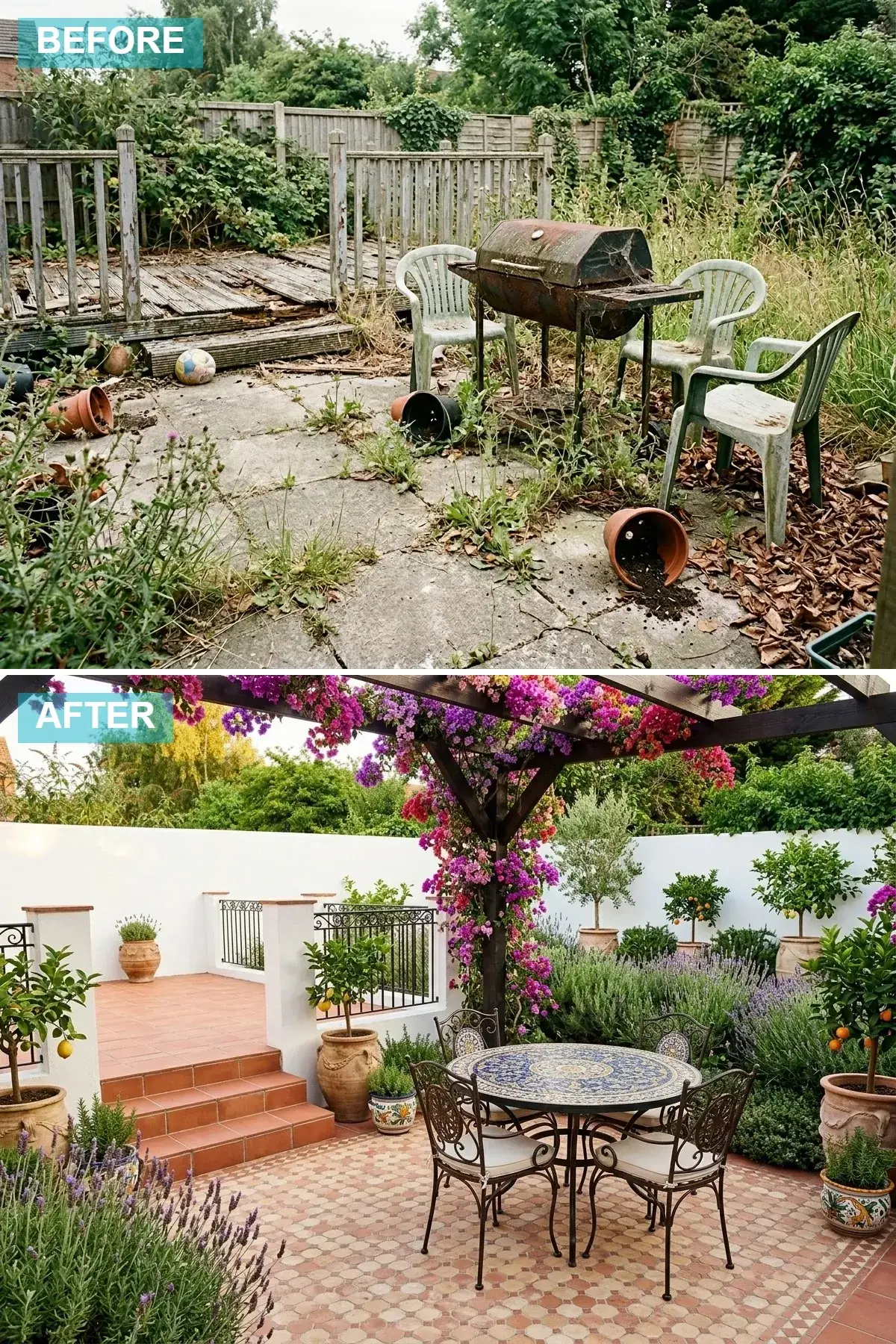
This one trades a blank yard for a terracotta-tiled patio and a crisp white stucco wall, with a dark-wood pergola carrying bougainvillea overhead. I’m not a warm-traditional designer by trade, but the bones here are smart: the pergola defines a dining room with no roof and no walls, the stucco wall bounces light back into a space that might otherwise feel closed, and potted citrus keeps the planting moveable. On a small lot, moveable beats permanent — you can re-zone the whole thing in an afternoon. It’s the same instinct behind the tiered planting in this wild-weeds-to-Tuscan-terraces revival.
Color Palette
Terracotta Orange
#C07A56
Earthy, warm, and traditional
Crisp White
#F5F5F5
Bright background that makes colors pop
Dark Walnut
#4A3B2F
Rich, dark wood providing structure
Wrought Iron Black
#222222
Classic and elegant metalwork
What Makes It Work
- A pergola gives you a ceiling plane — that’s what makes an open patio feel like a room instead of a slab.
- A white wall is a free light reflector; on a shaded urban lot it can add the equivalent of a window’s worth of brightness.
- Potted citrus and herbs keep the planting flexible, which is exactly what a small, evolving yard needs.
- One patterned surface — the mosaic tabletop here — earns more than a dozen scattered accessories.
Sleek Contemporary Lounge
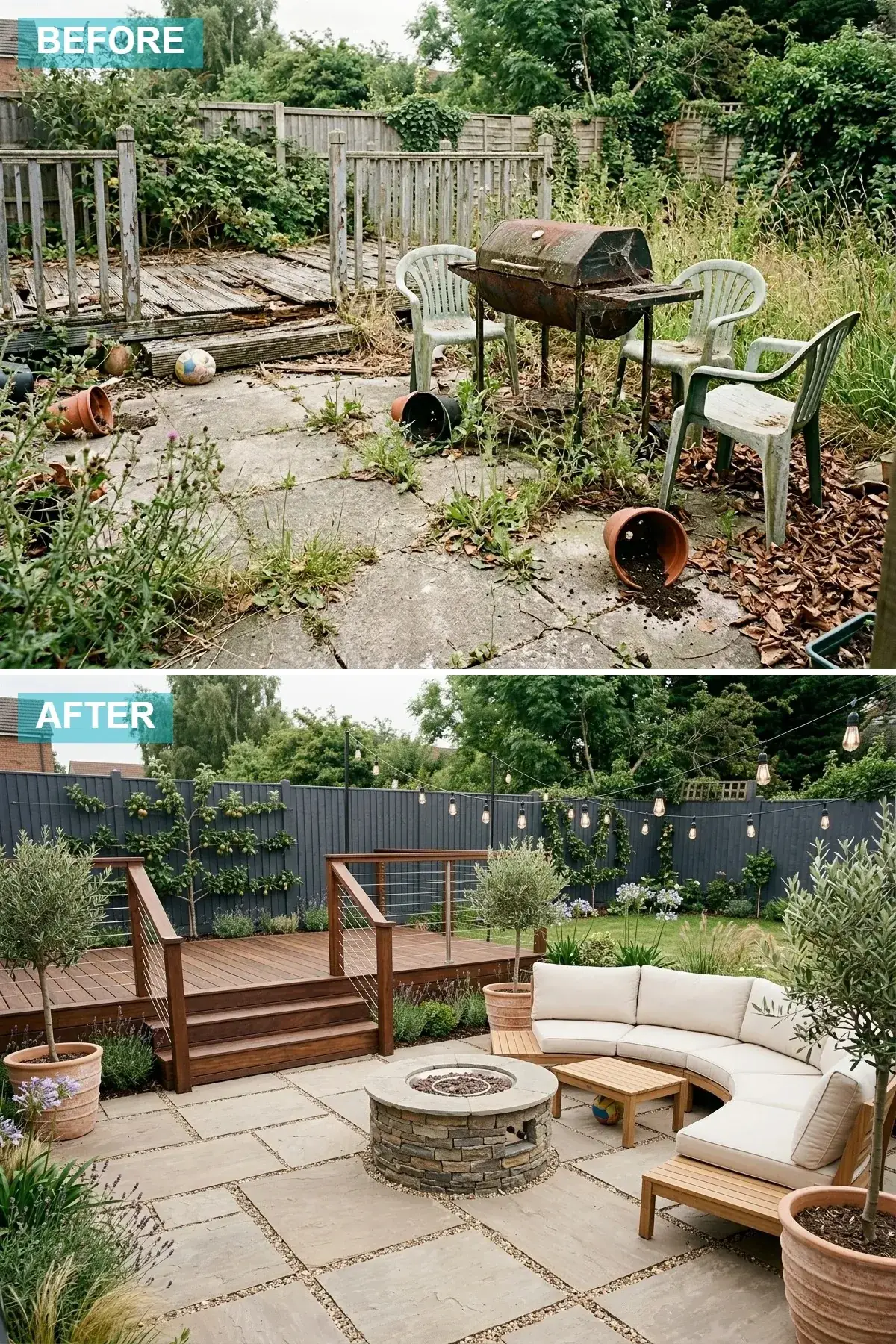
Here the old fence got painted a dramatic dark grey, and that single decision carries the whole scheme. Dark boundaries recede — the yard reads larger than it measures, and the green pops against them. A curved modular sofa wraps a circular stone fire pit on a flagstone patio, and the cable railing on the new dark-wood deck stays nearly invisible. The espaliered fruit trees flattened against the fence are the detail I’d steal first: they give you a structured green wall in maybe eight inches of depth, which is the kind of math that matters when the whole yard is tight.
Color Palette
Charcoal
#3F4347
A modern and dramatic backdrop
Dark Teak
#6D4F3A
Rich, elegant wood tone
Light Grey Stone
#BDBBB6
Neutral and clean paving
Cream
#F2EFE4
Soft, inviting contrast to dark elements
What Makes It Work
- A dark-painted fence is the cheapest way to make a small yard feel deeper — the boundary visually steps back.
- Curved furniture softens a rectangular lot; right angles everywhere only emphasize how boxy a small yard is.
- Cable railing meets code while staying out of the sightline — a quiet win on a compact deck.
- Espaliered trees deliver a green wall in inches of depth, not feet — pure square-footage efficiency.
Fresh & Airy Modern Cottage
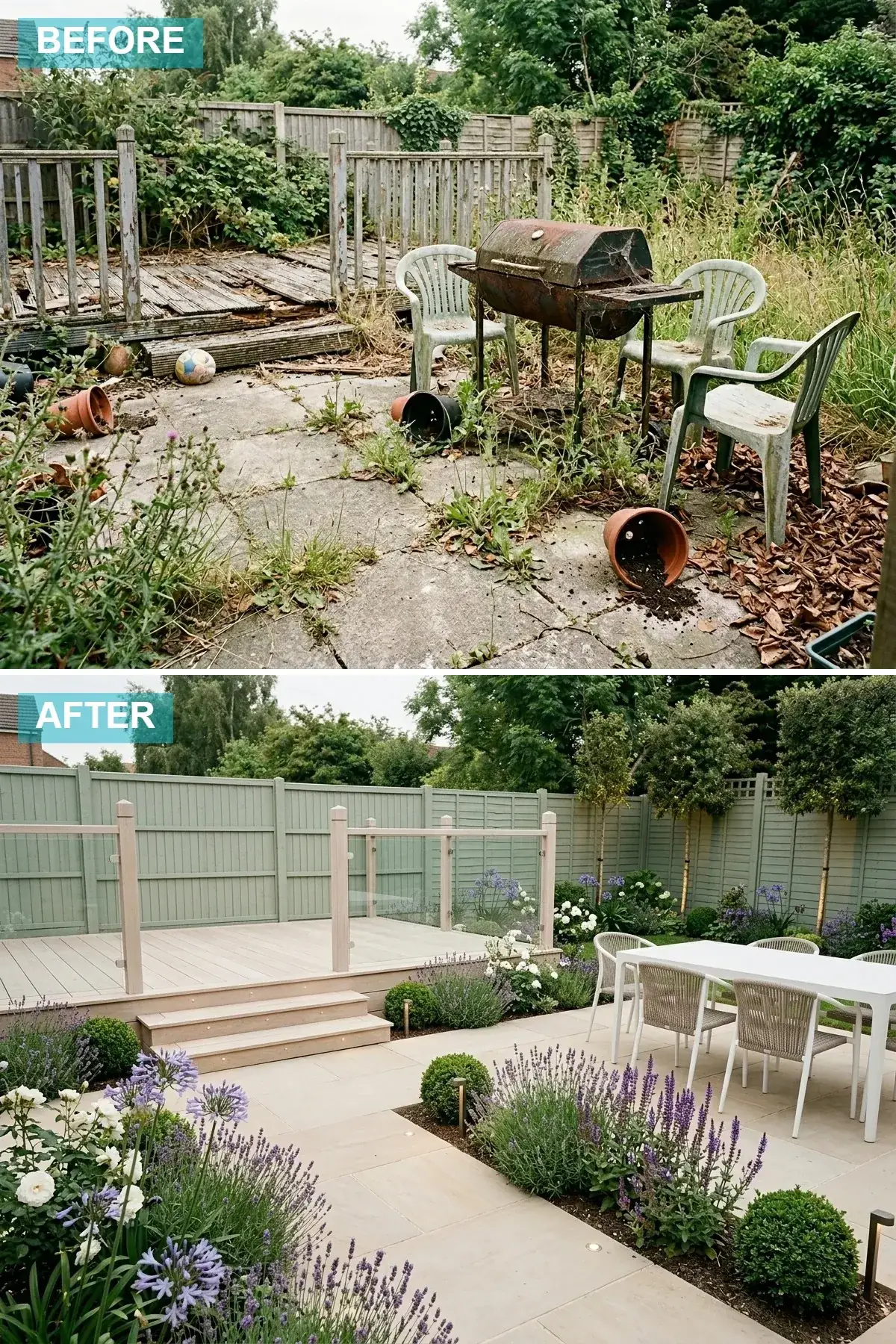
This is the palette I gravitate toward — soft sage fence, bleached deck, pale limestone paving, a white dining set, and structured cottage planting in lavender, box balls, and agapanthus. The light scheme does real work: light surfaces reflect rather than absorb, so a small garden feels bigger and brighter than its dimensions. Large-format slabs help too — fewer joint lines means a calmer, more expansive floor. It’s modern without being cold, which is the line I try to hold on every project. Warm minimalism, basically, dropped outdoors.
Color Palette
Soft Sage Green
#A9BBA3
Calm, natural, and soothing
Bleached Oak
#DCD2C3
Light and airy wood finish
Cream Limestone
#E8E2D3
Bright and clean flooring
Pure White
#FFFFFF
Crisp and modern focal point
What Makes It Work
- A light palette on fence and paving is the single most reliable trick for making a small yard feel larger.
- Pairing clean modern furniture with lavender and box balls is what keeps “modern” from tipping into “cold.”
- Large-format slabs read calmer than small pavers — fewer joints, less visual noise underfoot.
- Evergreen box gives you year-round structure, so the yard never fully empties out in winter.
Dramatic Minimalist Sanctuary
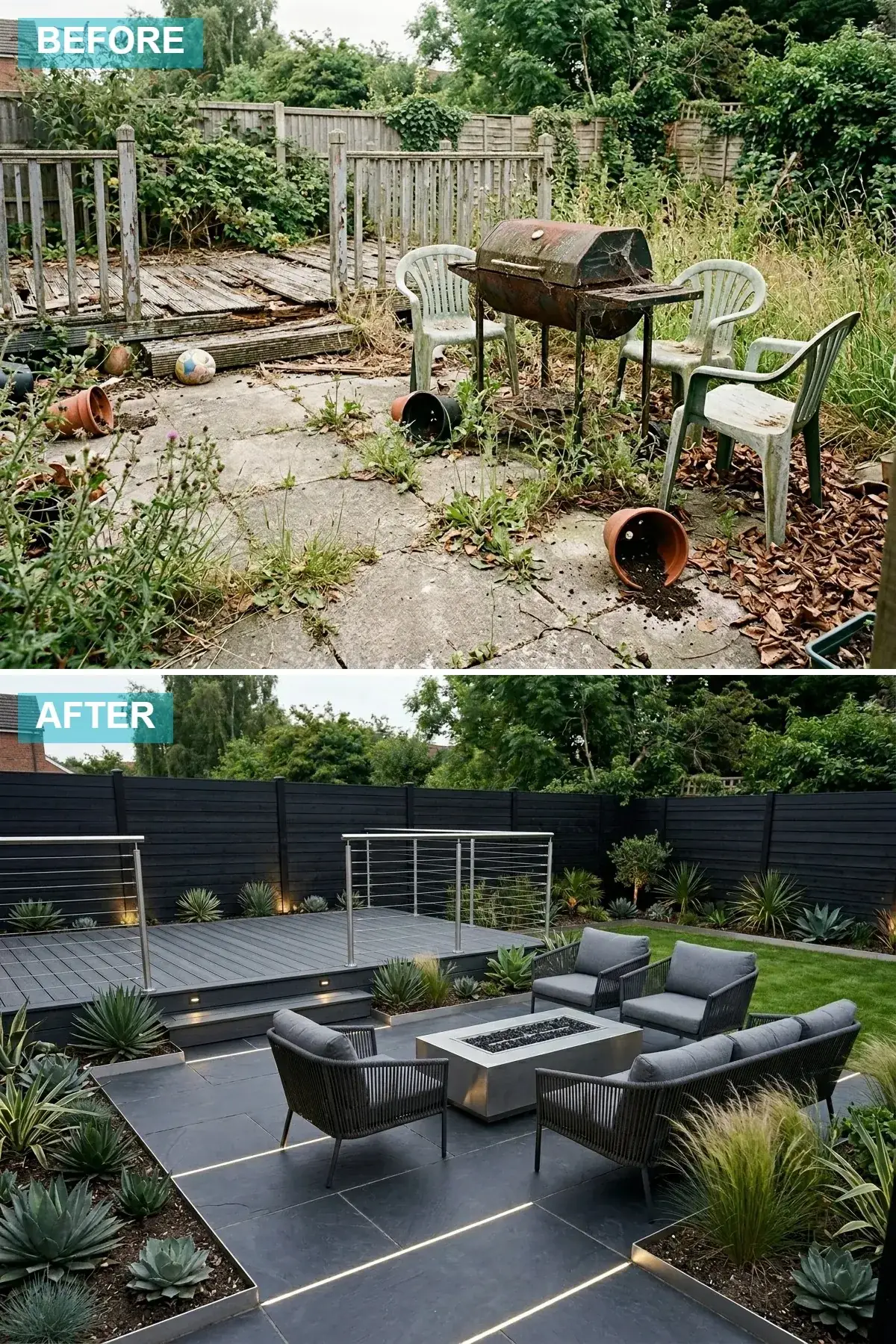
A black fence, a dark grey composite deck, and large slate tiles with integrated LED strip lighting turn this yard into a moody evening room. The detail that earns its cost is the lighting buried in the paving — it grazes the geometry after dark and gives the space a second identity at night. Composite decking is the practical call here; in a wet climate like mine, it skips the annual sanding-and-sealing ritual that real wood demands. Sculptural agaves and grasses keep the planting from fighting the clean lines.
Color Palette
Matte Black
#1A1A1A
Dramatic and receding background
Dark Slate Grey
#44484D
Unified, moody floor surface
Brushed Steel
#A0A0A0
Industrial and sleek metallic accent
Warm White LED
#FFF4E0
Creates a warm glow and highlights geometry
What Makes It Work
- Integrated LED strips in the paving give a small yard a dramatic second life after dark — high impact for the linear footage.
- A monochrome black-and-grey scheme makes a tight space feel deliberate rather than under-decorated.
- Composite decking is the low-maintenance pick in a wet PNW climate — no yearly seal-and-sand.
- Choose warm-white LEDs, not cool blue — warm light keeps “minimalist” from sliding into “clinical.”
Tranquil Japanese Zen Garden
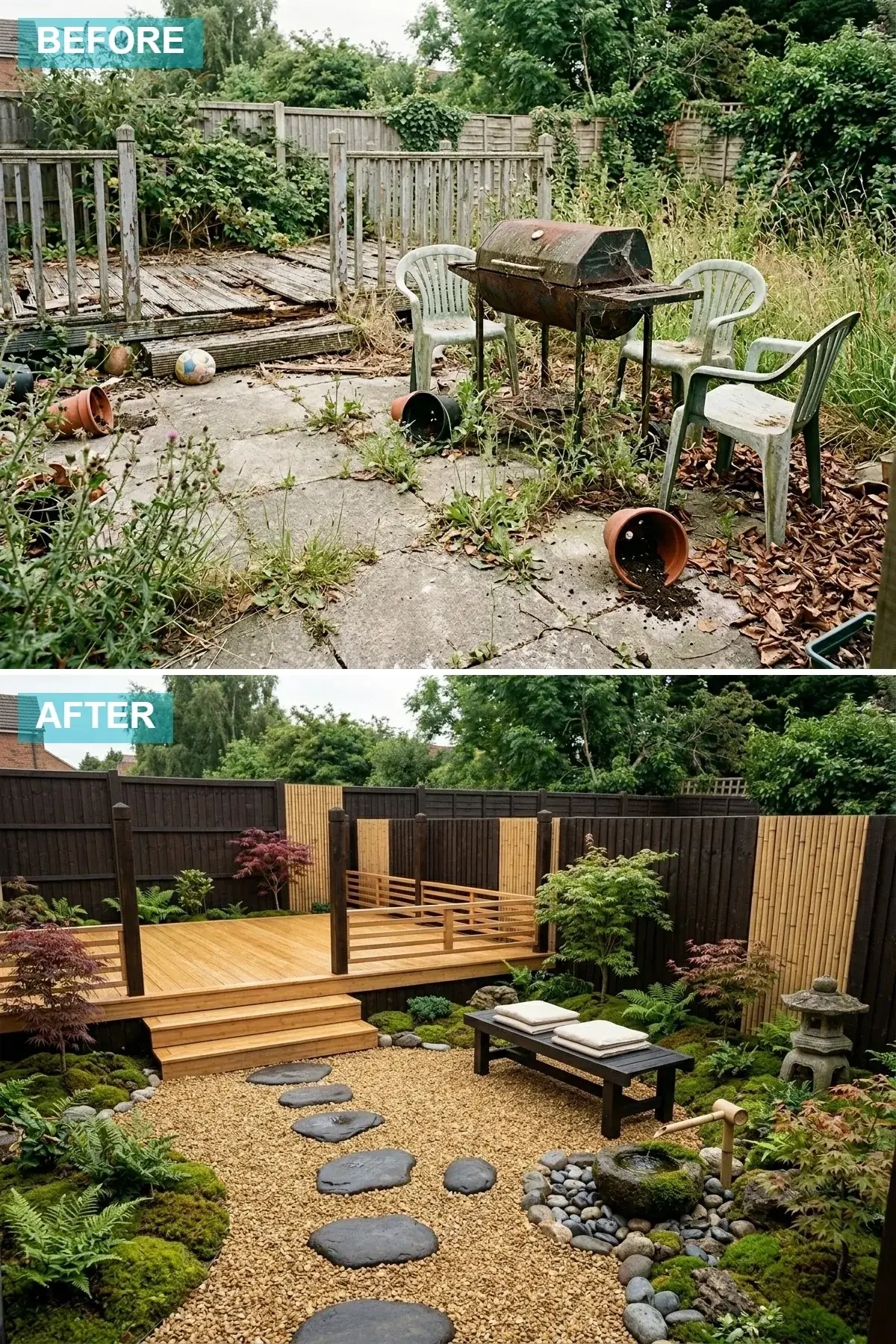
A gravel garden with stepping stones, a stone water basin, a bamboo fountain, moss and ferns under a Japanese maple — this is the most restful rewrite in the set, and the most disciplined. The two-tone fence pairs natural pine with charred shou sugi ban, and that single contrast carries the whole scheme without a drop of bright color. What I’d flag for a compact lot: gravel is a near-zero-maintenance ground plane, and the stepping stones force a slow, deliberate route across the yard that makes a small garden feel like a longer journey than it is. The same trick of making a tiny footprint read bigger drives this tiny urban courtyard bloom.
Color Palette
Natural Pine
#D9B476
Light wood providing warmth
Burnt Wood (Shou Sugi Ban)
#3B322C
Dark, contrasting wood element
Tan Gravel
#C9B28F
Neutral, textured base
Dark River Stone
#555555
Organic path markers
What Makes It Work
- Gravel as the main ground cover cuts maintenance to near zero and reads serene rather than sparse.
- A water feature adds sound, which masks street noise — undervalued on a small urban lot.
- Stepping stones slow your pace and stretch the perceived size of the garden.
- Shou sugi ban (charred wood) gives you a deep, weather-resistant dark tone without paint that peels.
Relaxed Coastal Getaway
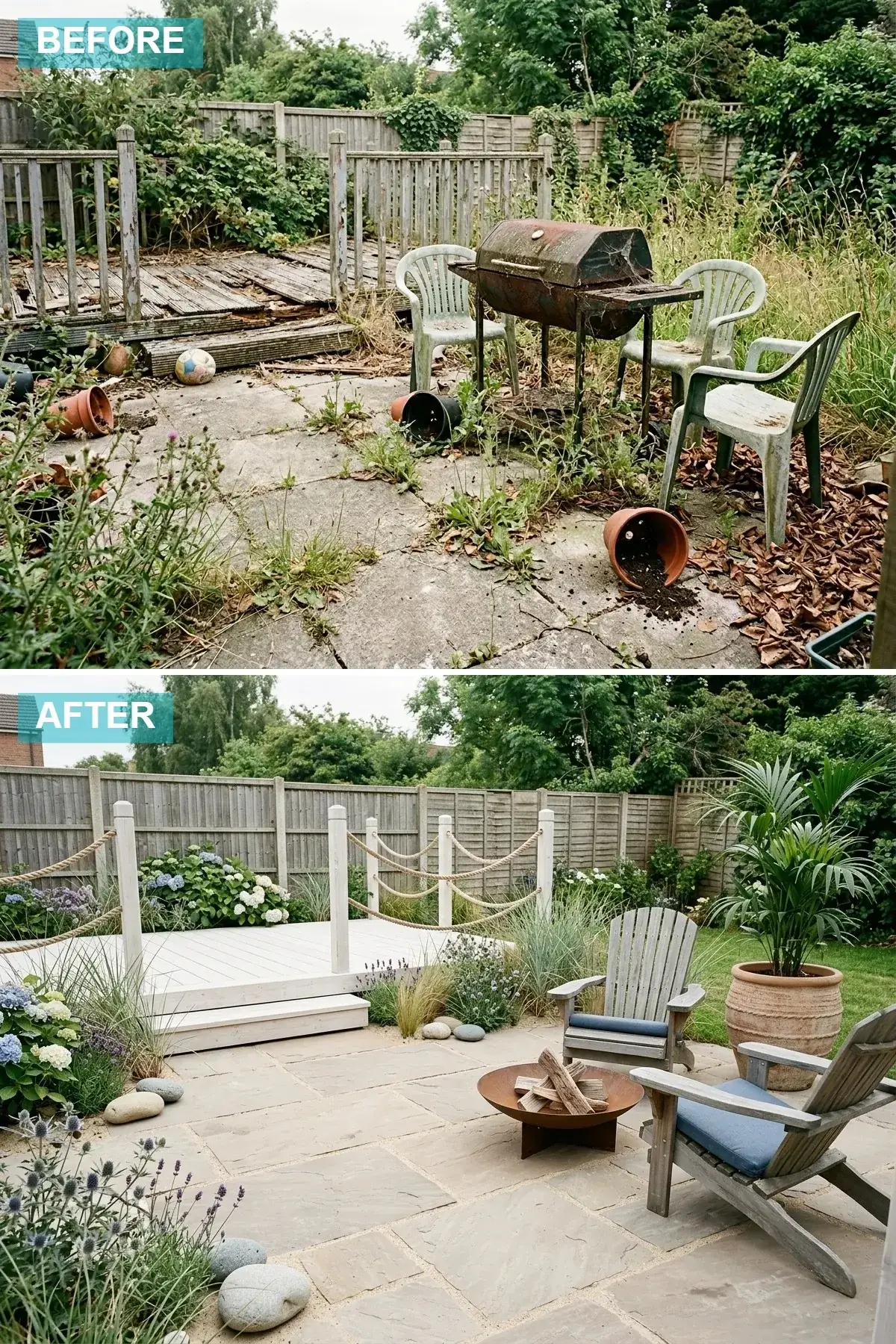
A white-washed deck with nautical rope railings, a sandstone patio, weathered Adirondack chairs around a fire bowl, and dune-style planting in ornamental grasses, sea holly, and hydrangea. This is a low-effort, high-payoff scheme — the rope railing alone resets the whole mood for the price of a coil of jute. I appreciate that nothing here is precious; the chairs are meant to weather, the grasses are meant to move, and the maintenance bar sits low enough that the yard stays relaxed instead of becoming a chore. That ease is the whole point of an outdoor room.
Color Palette
White Wash
#F0F0F0
Bright and breezy coastal look
Sandstone
#E3D2B4
Warm, sandy-colored flooring
Weathered Grey Wood
#AFAFAF
Rustic, sun-bleached timber
Natural Jute Rope
#C7A981
Nautical texture and color
What Makes It Work
- Thick rope railing is a near-free way to swap a yard’s whole personality.
- Adirondack chairs are built to weather, so they stay relaxed instead of demanding upkeep.
- Ornamental grasses add motion and mimic dune planting — texture without fuss.
- A white-wash deck over warm sandstone keeps the scheme bright without going stark.
Retro-Chic Mid-Century Patio
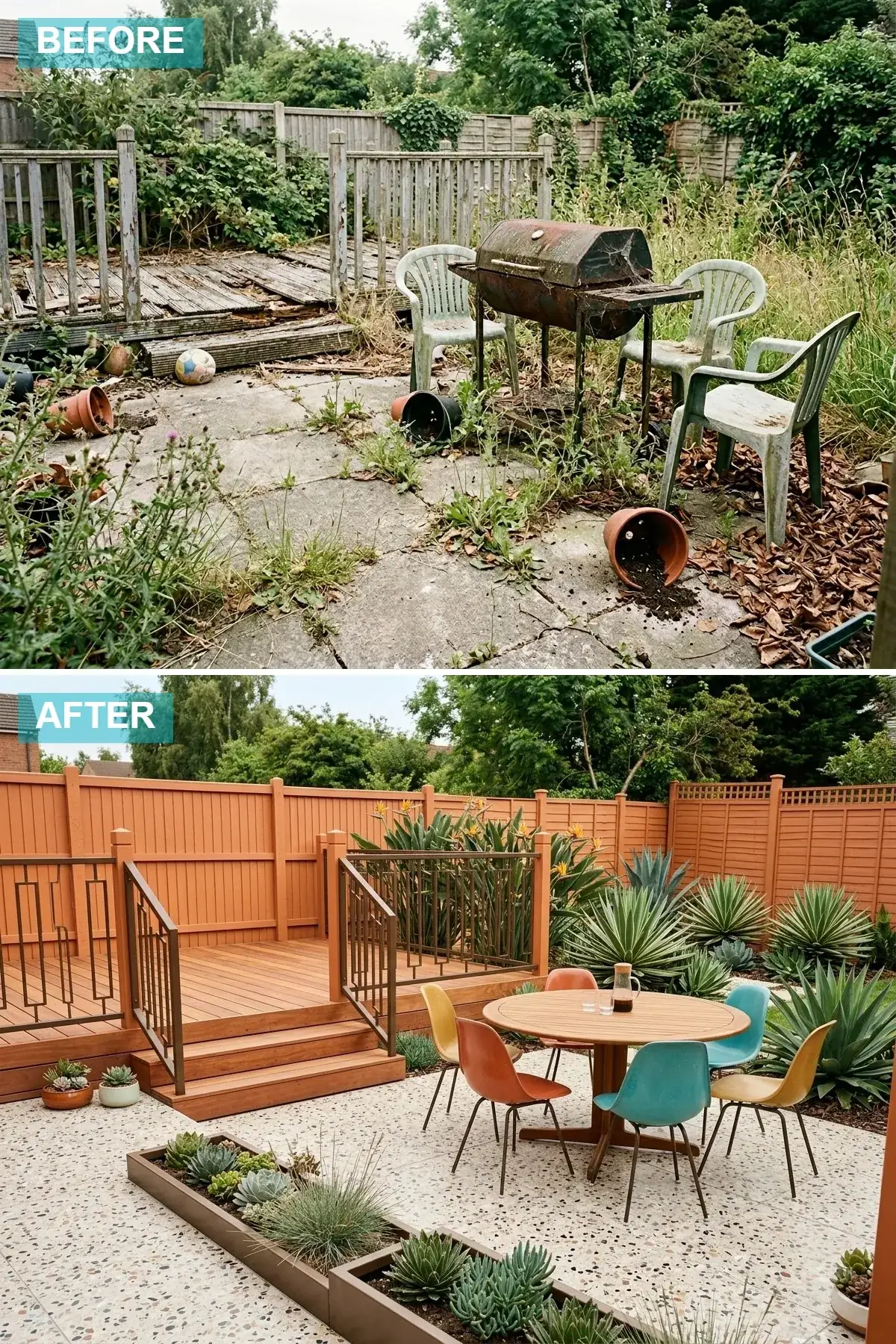
Terracotta-painted fence and deck wrap a speckled terrazzo patio, with a round wooden table and colorful Eames-style chairs at the center. This is the most confident use of color in the bunch, and it holds together because the envelope is one unified tone — paint the fence and deck the same terracotta and the bold furniture has somewhere to land. The built-in planters are the architect’s move: they give the patio permanent structure and greenery without surrendering floor space to freestanding pots that always end up in the way.
Color Palette
Terracotta
#BA6A4A
Warm, earthy, and retro
Terrazzo
#EBEBEB
Speckled composite with pops of color
Teal Blue
#008F9B
A vibrant pop of mid-century color
Mustard Yellow
#D4AF37
Another classic retro accent tone
What Makes It Work
- One unified envelope color lets bold furniture carry the room without the space feeling chaotic.
- Terrazzo (or terrazzo-look porcelain) is a durable, genuinely retro floor that hides debris well.
- Built-in planters add permanent greenery while keeping the floor clear — a real square-footage gain.
- Architectural plants like agaves echo the clean mid-century lines instead of softening them away.
Charming Rustic Cottage Garden
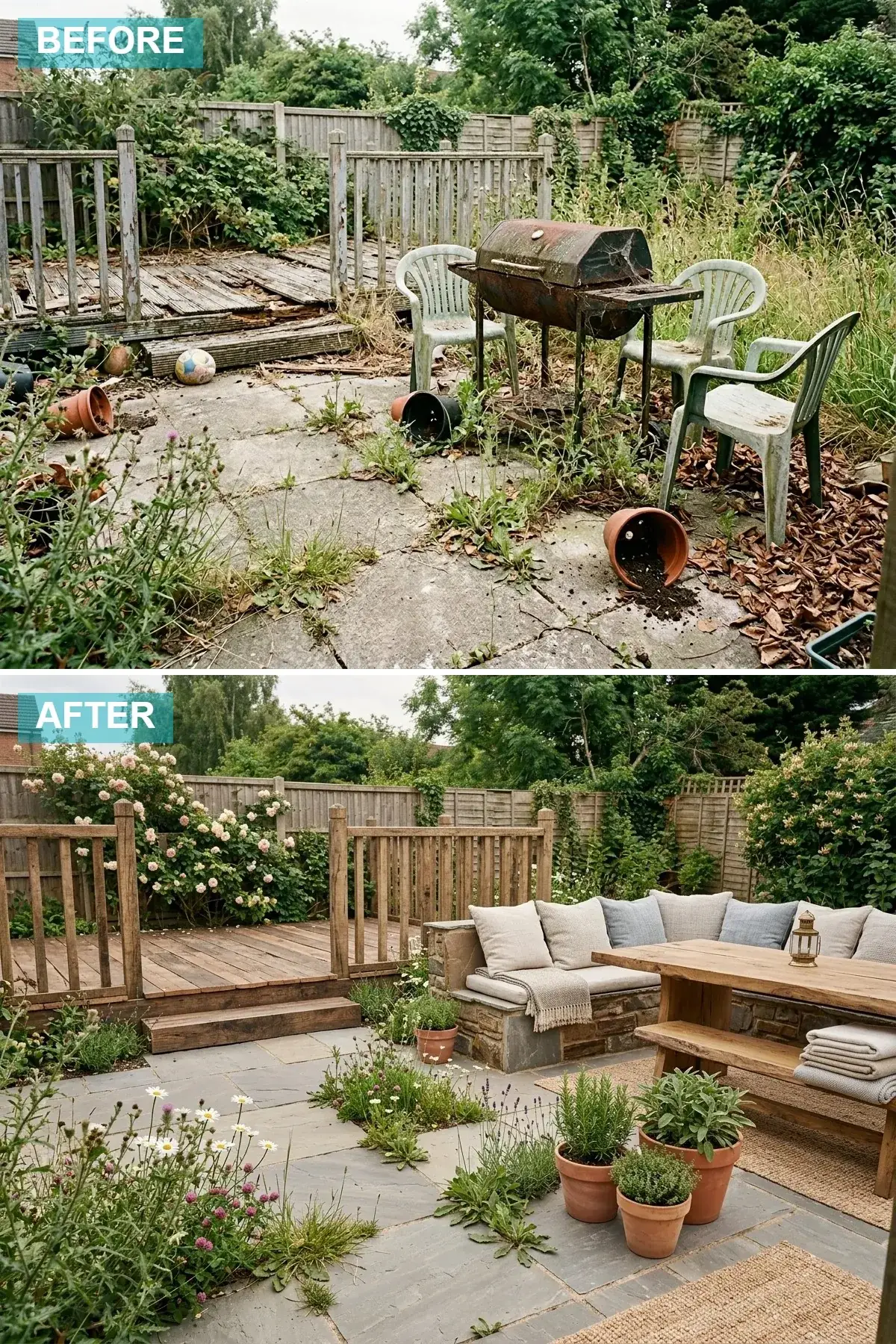
Reclaimed wood for the deck and pergola posts, a stone-clad built-in bench, a slate patio, and romantic planting in roses, foxgloves, and potted herbs. The reclaimed timber does the heavy lifting — it brings age and character that new lumber simply can’t fake on day one. From a planning angle, the built-in stone bench is the smart bet: permanent seating that reads as part of the garden’s architecture, frees you from storing loose chairs, and holds up in weather. It’s the same case for built-ins I make indoors on every compact plan — fixed storage and seating always beat freestanding furniture when square footage is scarce.
Color Palette
Reclaimed Timber
#8B6B4B
Aged, textured wood with character
Blue-Grey Slate
#707A83
Natural stone with varied tones
Fieldstone
#9E9386
Rustic stone veneer
Aged Terracotta
#C5835E
Classic, earthy pots
What Makes It Work
- Reclaimed wood delivers instant age and character that new lumber can’t buy.
- A built-in stone bench gives permanent, weatherproof seating and erases the loose-chair storage problem.
- Grouped terracotta pots of herbs put function and fragrance right where you cook and sit.
- Climbing roses and tall foxgloves build the garden vertically — the right direction when ground space is short.
Striking Monochrome Modern
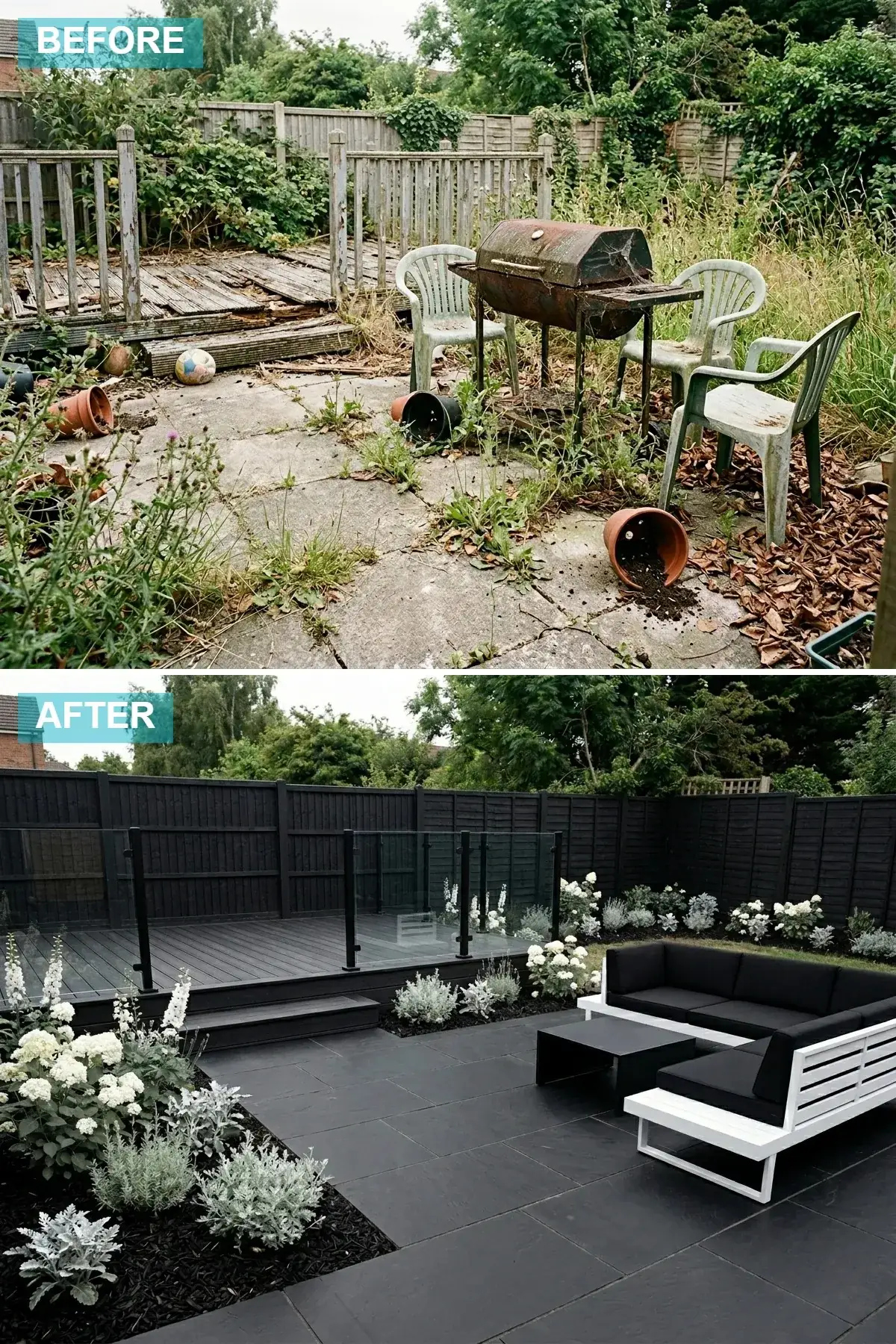
The boldest scheme of the eleven: black fence, black composite deck, black slate patio, even black mulch in the beds, with a white sofa and silver-foliaged plants set against it. I’ll be honest about the trade-off — this much dark surface absorbs heat and absorbs light, so it asks for a sunnier, more open yard than most, and it lives or dies on the white accents being genuinely white. Done right, though, the discipline is striking; the silver foliage glows against the black, and the whole yard reads as one considered composition rather than a collection of parts. It’s a high-wire act, but a controlled one.
Color Palette
Midnight Black
#0F0F0F
Deepest black for maximum drama
Black Slate
#2C2C2C
Dark natural stone flooring
Stark White
#FFFFFF
High-contrast accent color
Black Dyed Mulch
#141414
Ensures the ground plane is dark
What Makes It Work
- A strict black-and-white palette delivers the most dramatic, modern result of any scheme here.
- Black mulch unifies the ground plane and makes green and silver foliage read sharper.
- Reserve it for sunnier yards — dark surfaces absorb both heat and light, so shade compounds the gloom.
- Clean geometric furniture keeps the look intentional; anything fussy fights the minimalist envelope.
Classic English Country Garden
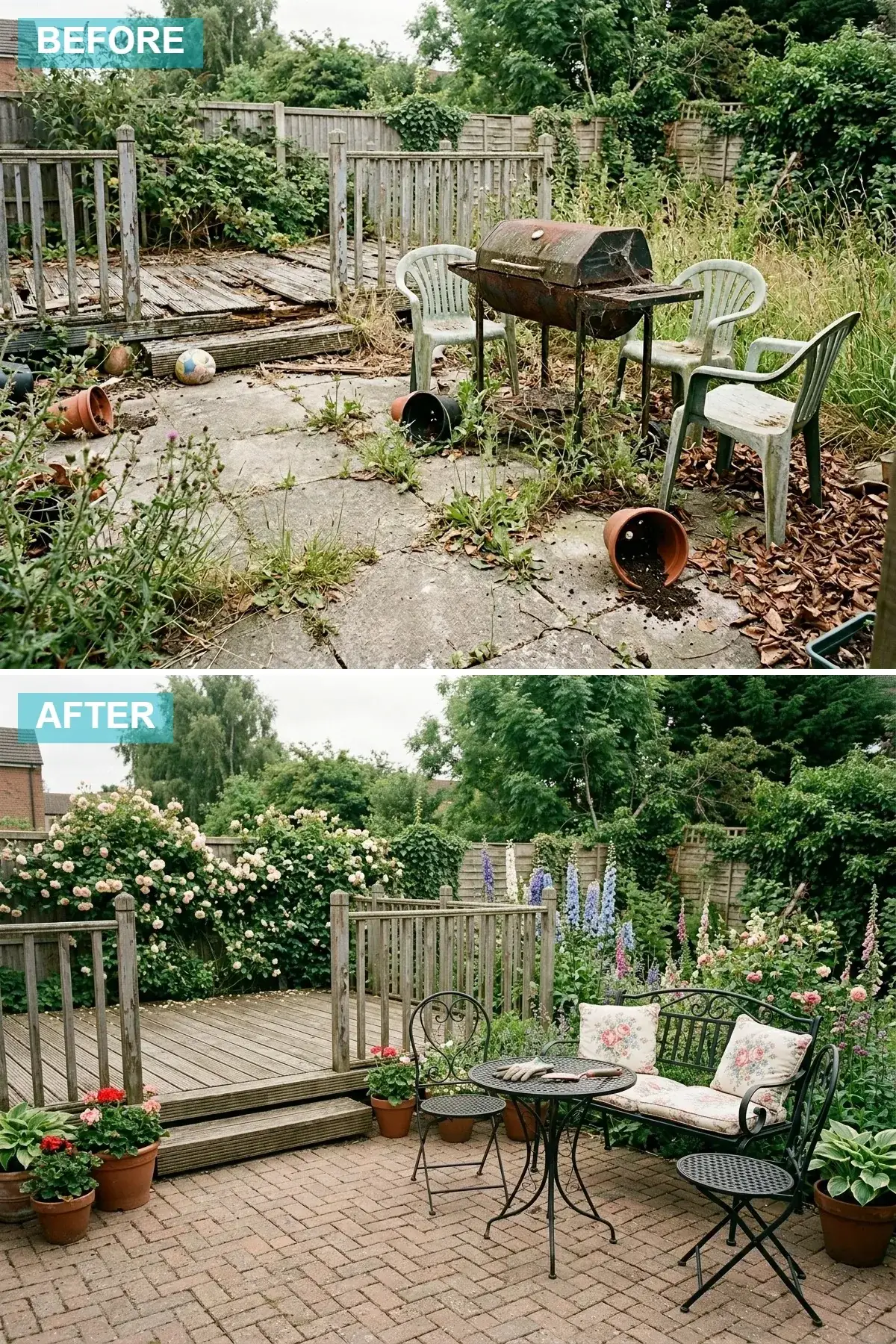
A refurbished wooden deck, a new brick-paver patio, a wrought-iron bistro set, and abundant climbing roses, delphiniums, and hostas — the most traditional rewrite in the set, and a reminder that not every transformation needs to gut and replace. They kept the deck and refurbished it, which is exactly the right-sizing instinct: spend where it counts, keep what still works. Brick laid in herringbone gives the patio a pattern that earns its keep, and the wrought iron will outlast almost anything else in the yard. For an outdoor space framed around generous living, the contemporary plan I reviewed with its extensive outdoor living areas takes the same idea up to full architectural scale.
Color Palette
Weathered Pine
#BCAAA4
Naturally aged wood tone
Red Brick
#A65E4E
Traditional and warm paving
Black Wrought Iron
#111111
Timeless and elegant metal
Cream Floral
#F0EAD6
Soft pattern adding a romantic touch
What Makes It Work
- Refurbishing the existing deck instead of replacing it is the right-sized move — spend where it counts.
- Brick in a herringbone pattern gives the floor visual interest that pays for itself.
- Wrought iron is durable and timeless; it’ll outlast almost everything else in the garden.
- Climbing roses on a trellis add height, color, and scent without taking ground-level square footage.
How I’d Plan a Backyard From Scratch
- Zone before you buy anything. Decide what the space is for — dining, lounging, cooking, growing — and draw those zones to scale first. The hardscape and furniture follow the plan, not the other way around. This single step separates the yards that work from the ones that never resolve.
- Spend your money on the floor and the boundary. A well-built patio or deck and a considered fence are the bones of the whole room. Skimp on materials here and everything you set on top inherits the weakness. Everything else is changeable; these two are not.
- Light it in two layers. Functional light for paths and cooking, mood light — string lights, uplights, integrated strips — for everything else. Lighting is the cheapest way to add usable hours to a small yard, and it’s almost always the afterthought that should have been planned in from the start.
- Build up, not out. On a tight lot, climbing plants, espaliers, pergolas, and built-in seating give you program without eating floor area. The same discipline I bring to a compact interior — fixed built-ins over freestanding furniture — applies square for square outdoors.
Frequently Asked Questions
How do I make a small backyard feel bigger?
Three reliable moves: paint the fence a dark, receding tone or use a light, reflective palette throughout; lay large-format paving instead of small pavers to cut down on visual joint lines; and build vertically with climbing plants, espaliers, and pergolas so you gain program without consuming floor area. A deliberate path — stepping stones or a change in level — also stretches the perceived size by slowing how you move through the space.
What’s the best low-maintenance backyard surface?
For decking in a wet climate, composite skips the annual sand-and-seal that natural wood demands. For the ground plane, gravel is close to zero-maintenance and reads calm rather than sparse. Large porcelain or stone pavers are durable and easy to clean. The lower you set the maintenance bar, the more likely the yard stays an outdoor room instead of becoming a weekend chore.
Should I build a deck or lay a patio?
It depends on grade. A deck makes sense where the ground slopes or sits below the door threshold, since it lets you build a level platform out over the fall. A patio suits flat or near-flat ground and usually costs less per square foot. Many of the best small yards use both at different levels — the level change itself zones dining from lounging without needing a wall.
Where should I spend my budget first?
On the floor and the boundary — the patio or deck, and the fence. They’re the bones of the outdoor room, they’re the hardest to change later, and everything you place on top inherits their quality. Furniture, planting, and lighting are all comparatively easy to upgrade over time, so it’s fine to phase those in after the structure is right.
Do built-in benches really save space?
Yes, and it’s the same logic I use indoors on compact plans. A built-in bench tucks seating against a wall or fence, reads as part of the architecture, removes the storage problem that loose chairs create, and stands up to weather. On a small footprint, fixed built-ins almost always outperform freestanding furniture square for square.
Final Read
Eleven yards, eleven styles, one method. Whether the result lands modern, coastal, or full English country, the transformations that hold up all started the same way — a plan that decided what the space was for, money spent on the floor and the boundary, and program built up rather than sprawled out. That’s right-sizing applied outdoors, and it works on a 300-square-foot patch as cleanly as it does on a compact floor plan. Pick the style that fits how you actually live, zone it honestly, and your backyard stops being the room you never finish.
Sources & Further Reading
- American Society of Landscape Architects (ASLA) — residential design guidance on outdoor-room zoning, circulation, and small-site planning.
- Fine Gardening — plant selection and structure for compact gardens, including espalier and evergreen framework planting.
- This Old House — deck-versus-patio cost and construction comparisons, plus composite-decking maintenance guidance.
- Trex / composite decking technical resources — wet-climate maintenance expectations versus natural timber.
- The Royal Horticultural Society (RHS) — cottage-garden and traditional planting references for the English country and rustic schemes.
Comments
Loading comments…
Leave a comment
Your email won't be published — it's only used to let you know if we reply. Comments appear after approval.